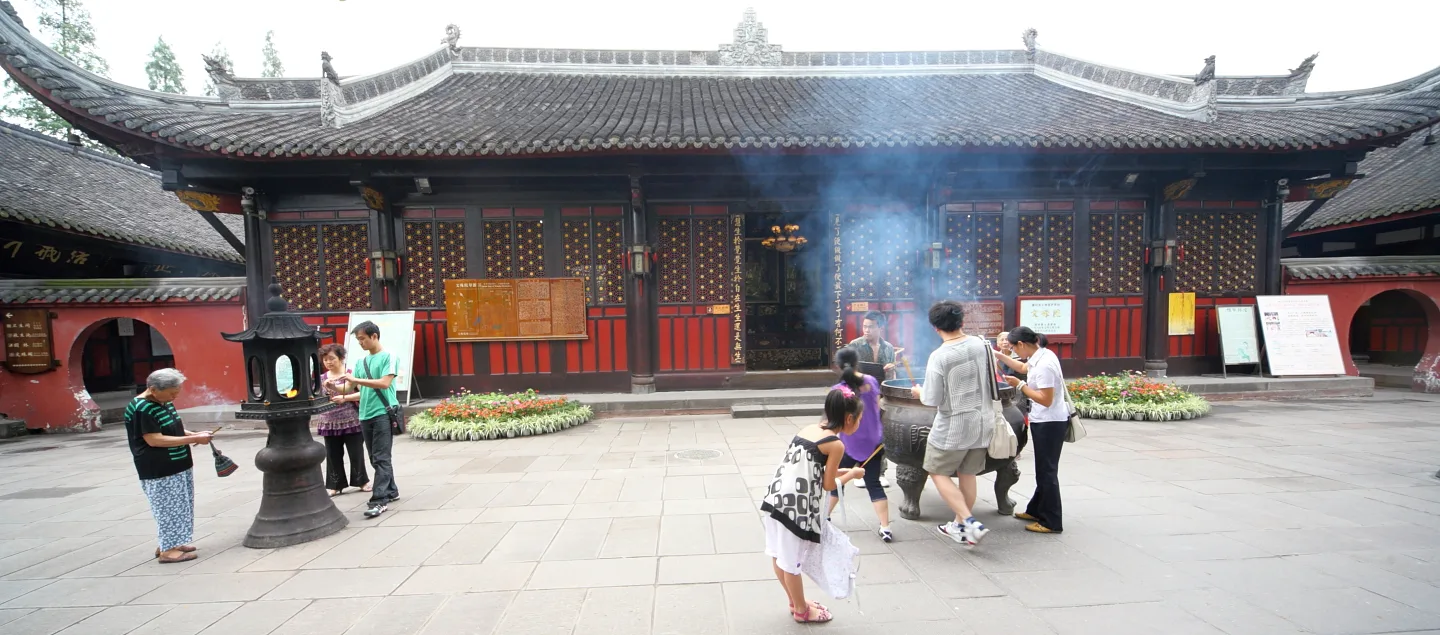
Chengdu has several important temples, including Wenshu Monastery, Daci Temple, and Qingyang Palace. They are not museums: people come to pray, make offerings, and meet monks. Visitors are welcome, but a little etiquette goes a long way. The rules are simple — dress modestly, keep quiet, respect the shrines, and be careful with anyone who approaches you for a 'donation.'
Basic etiquette
Wear clothing that covers shoulders and knees, especially at active monasteries. Remove hats inside shrine halls. Do not point your feet at statues or sit on carved thresholds. Walk clockwise around stupas and prayer wheels if you are unsure, and follow the flow of worshippers.
Keep your voice low. Do not interrupt someone praying to take a photo. If you want to photograph monks or worshippers, ask first; many will decline, and that is fine. Some halls prohibit photography entirely; look for signs or ask a volunteer.
- Cover shoulders and knees
- Remove hats in shrine halls
- Ask before photographing people
Incense, donations and rituals
Incense is usually available at the entrance or in courtyards. Light it in the designated area, not inside a wooden hall. Three sticks is a common offering. Do not throw incense or leave burning sticks unattended.
Donations are optional. Use official donation boxes rather than giving cash to someone who approaches you with a bracelet, charm, or 'blessing.' Fake monks are a known tourist scam in Chengdu. If someone demands payment for a ritual you did not request, decline and walk away.
- Light incense only in designated areas
- Use official donation boxes
- Ignore unsolicited blessings and charms
Which temples to visit
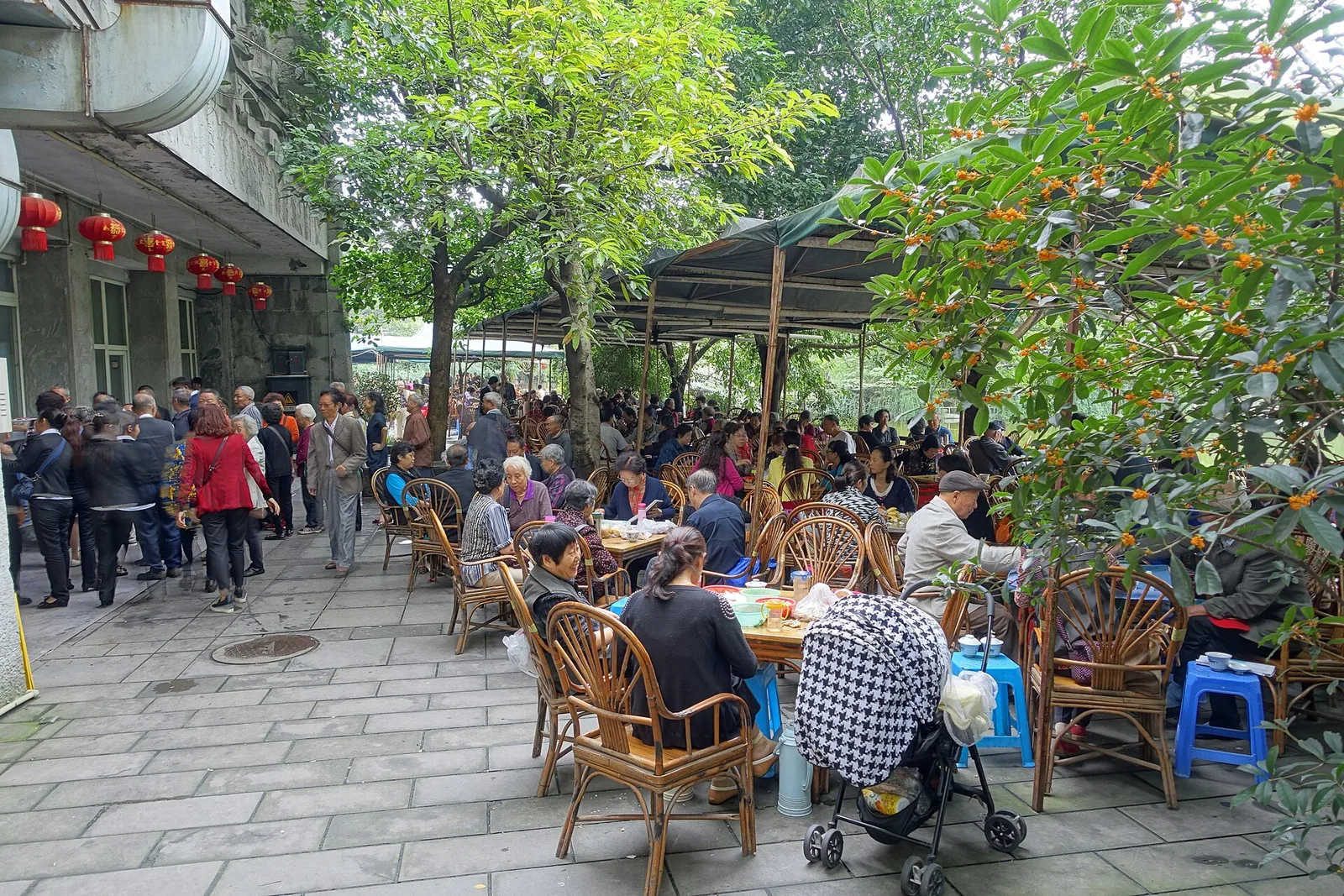
Wenshu Monastery is the most visitor-friendly: central, active, with gardens, a vegetarian restaurant, and tea areas. Daci Temple sits beside Taikoo Li and offers a quiet contrast to the shopping district. Qingyang Palace is a Taoist temple with a more lived-in atmosphere. All three are worth a short visit.
Temples usually open in the morning and close in the late afternoon; hours vary. Check before you go. Some halls close for rituals, and photography may be restricted during services. A 30–60 minute visit is enough unless you are attending a teaching or tea session.
Practical visiting details
Wenshu Monastery is the easiest first visit: central, free to enter, and active without feeling closed to visitors. Daci Temple is smaller and sits inside the Taikoo Li complex, so it works as a 20-minute pause in a shopping day. Qingyang Palace, the Taoist temple, charges a small admission fee and feels more lived-in; check the current fee and opening hours before you go. All three are working religious sites, not museums, so a short, quiet visit is more appropriate than a guided photo tour.
Incense bundles are sold at the gate or in the courtyard, usually for a few yuan; you do not need the largest bundle, and three sticks is enough. Some halls close briefly during services, and festival days such as the Lunar New Year and the fifteenth of the lunar month bring long queues and heavy smoke. Go early in the morning if you want calm. Footwear matters: some smaller shrine rooms ask visitors to remove shoes, so wear shoes you can slip off and socks without holes.
- Wenshu: free entry and central
- Daci: a 20-minute pause at Taikoo Li
- Qingyang: small fee; check current hours
Best for
- Travelers interested in Buddhist and Taoist culture
- Visitors seeking a quiet break from the city
Honest notes
- Some temples are active sites, not tourist attractions.
- Fake monk donation scams exist near popular sites.
- Hours can change for religious festivals.
Not for
- Travelers who want a guided historical tour
- Anyone unwilling to follow dress and photography rules
Keep planning