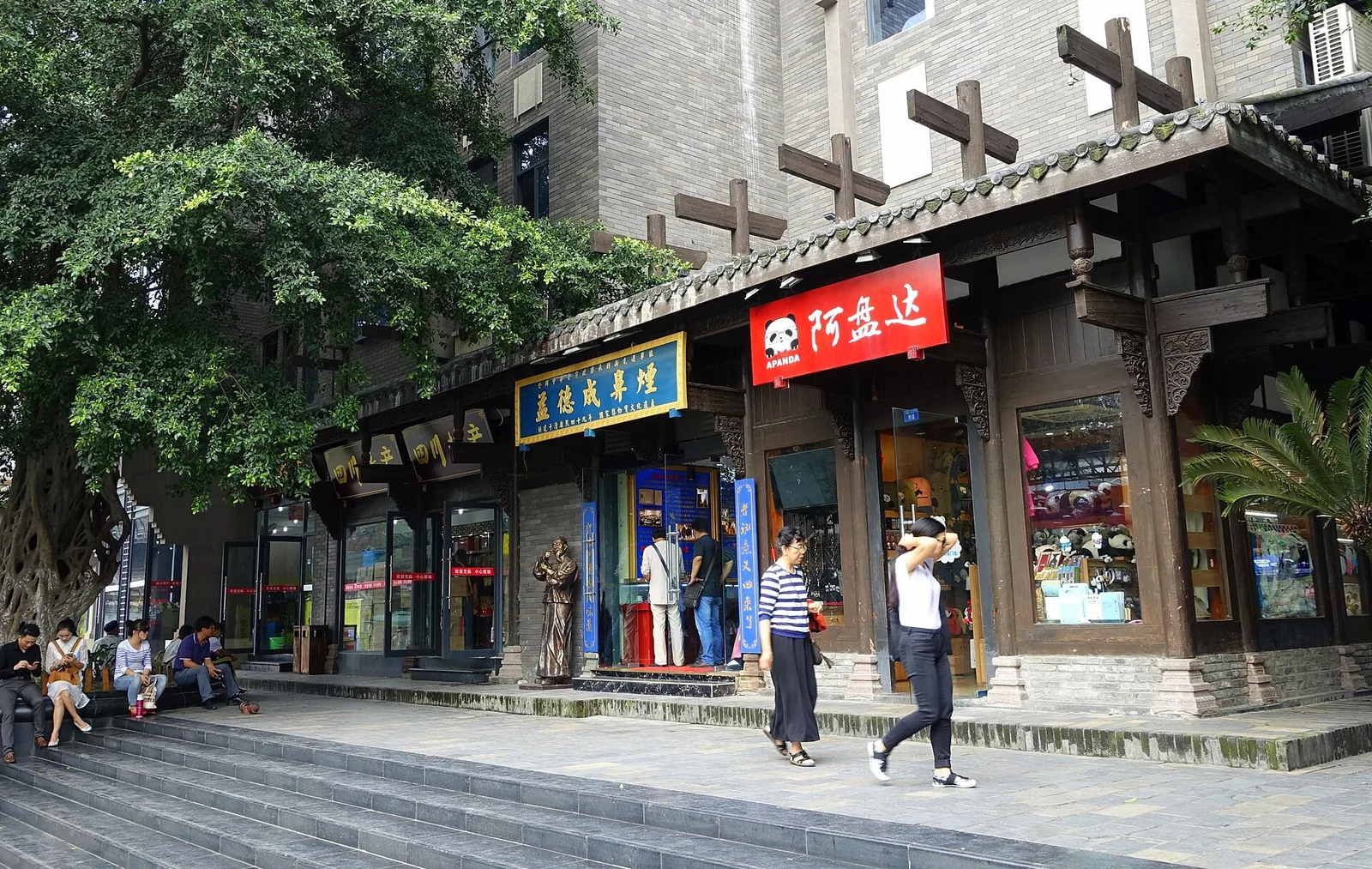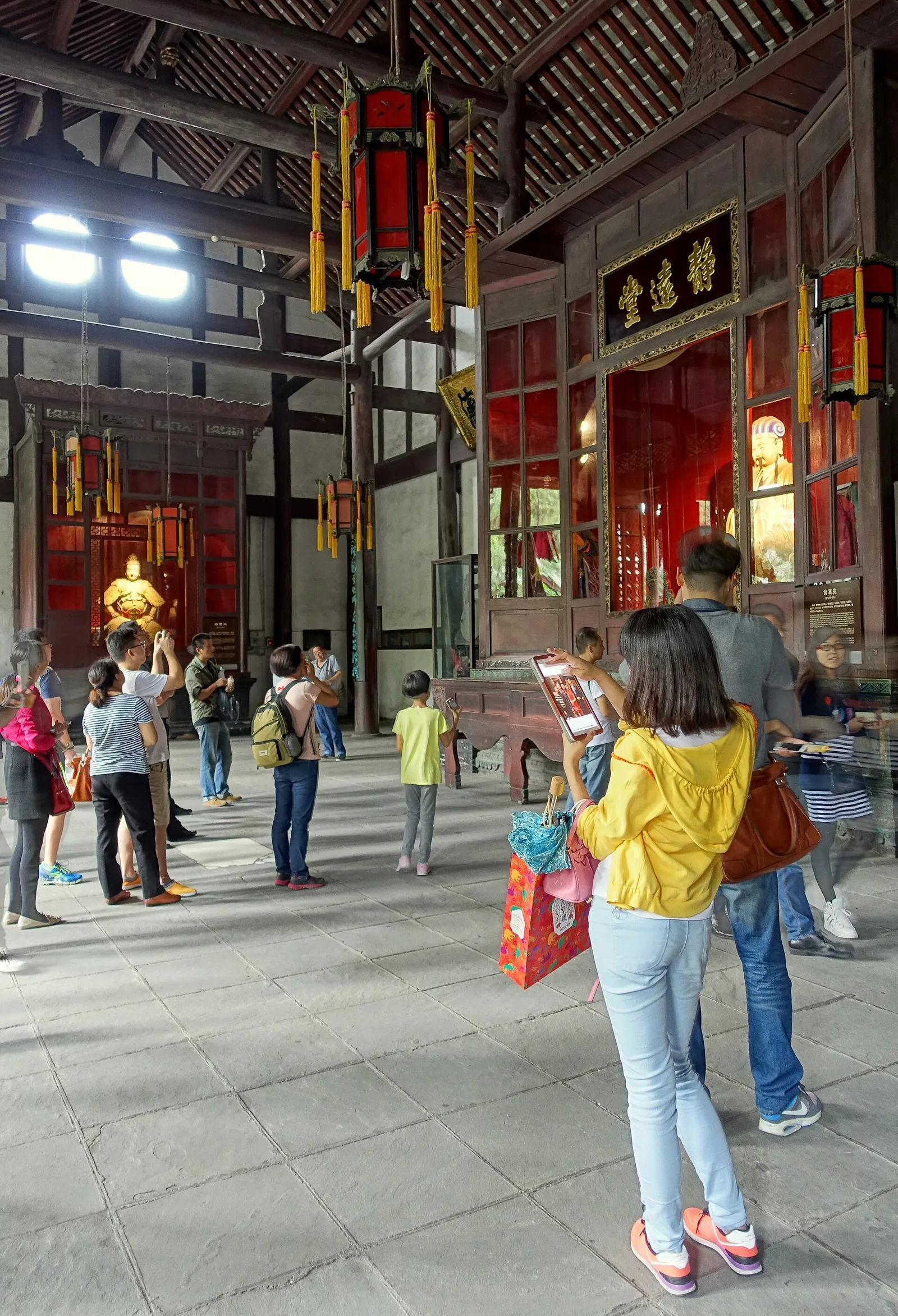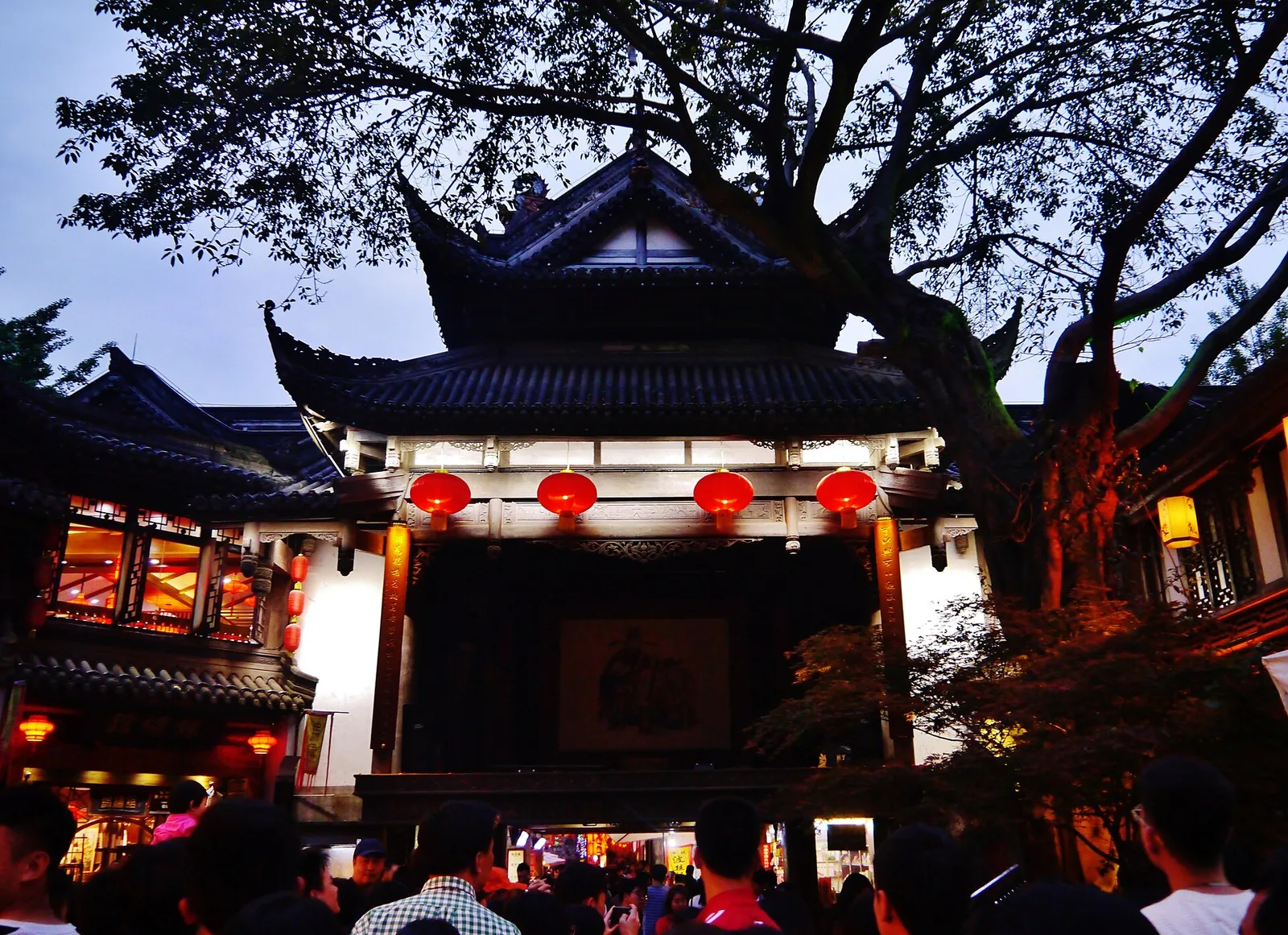
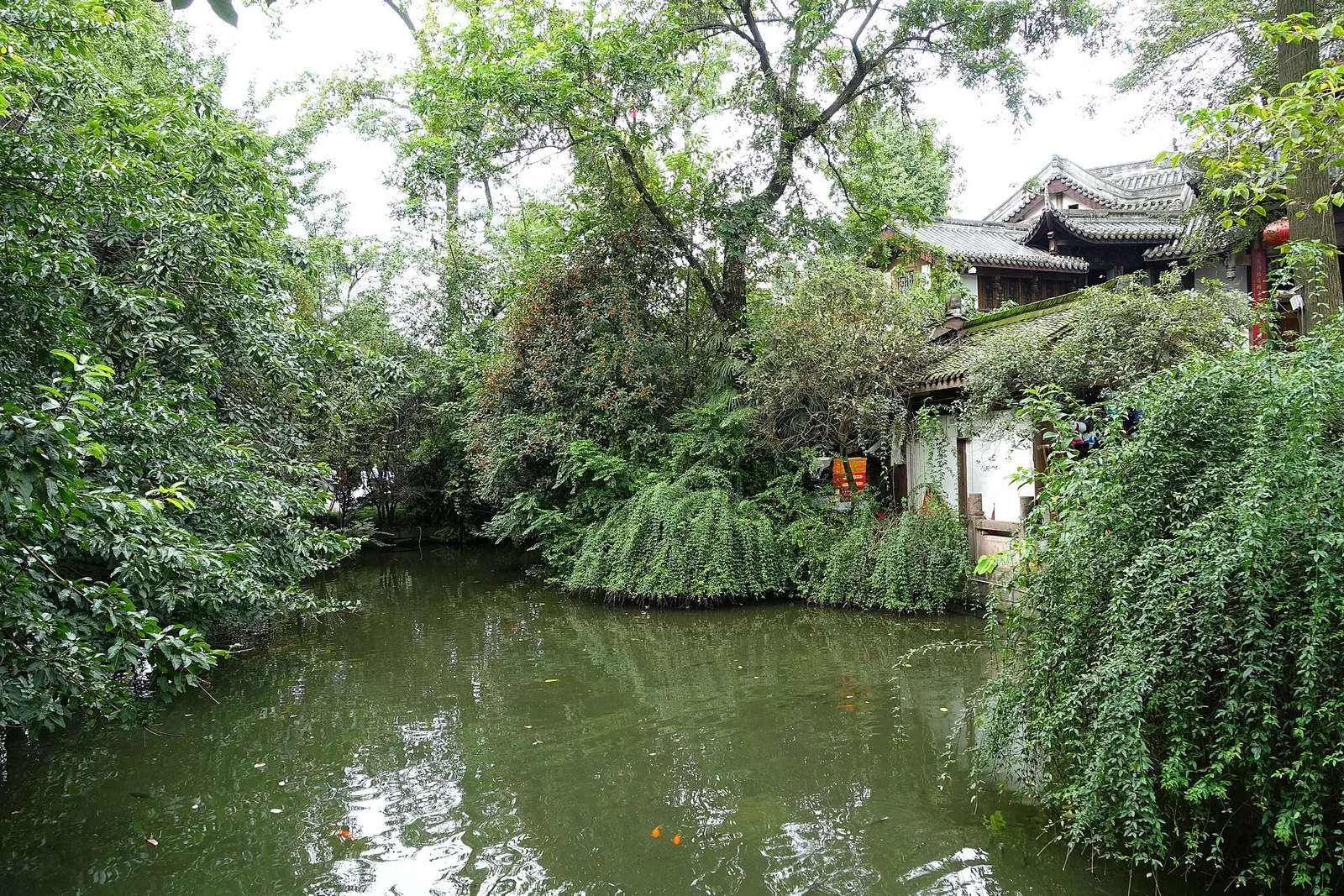
Jinli is Chengdu's most famous old-street set piece: a 550-meter pedestrian lane of wooden facades, red lanterns, snack stalls, and souvenir shops beside Wuhou Shrine. It is free, photogenic, and very busy. The right way to enjoy it is to combine it with Wuhou Shrine, come in the late afternoon or early evening, and treat it as a lively snack-and-stroll stop rather than a deep cultural experience.
What Jinli is good for
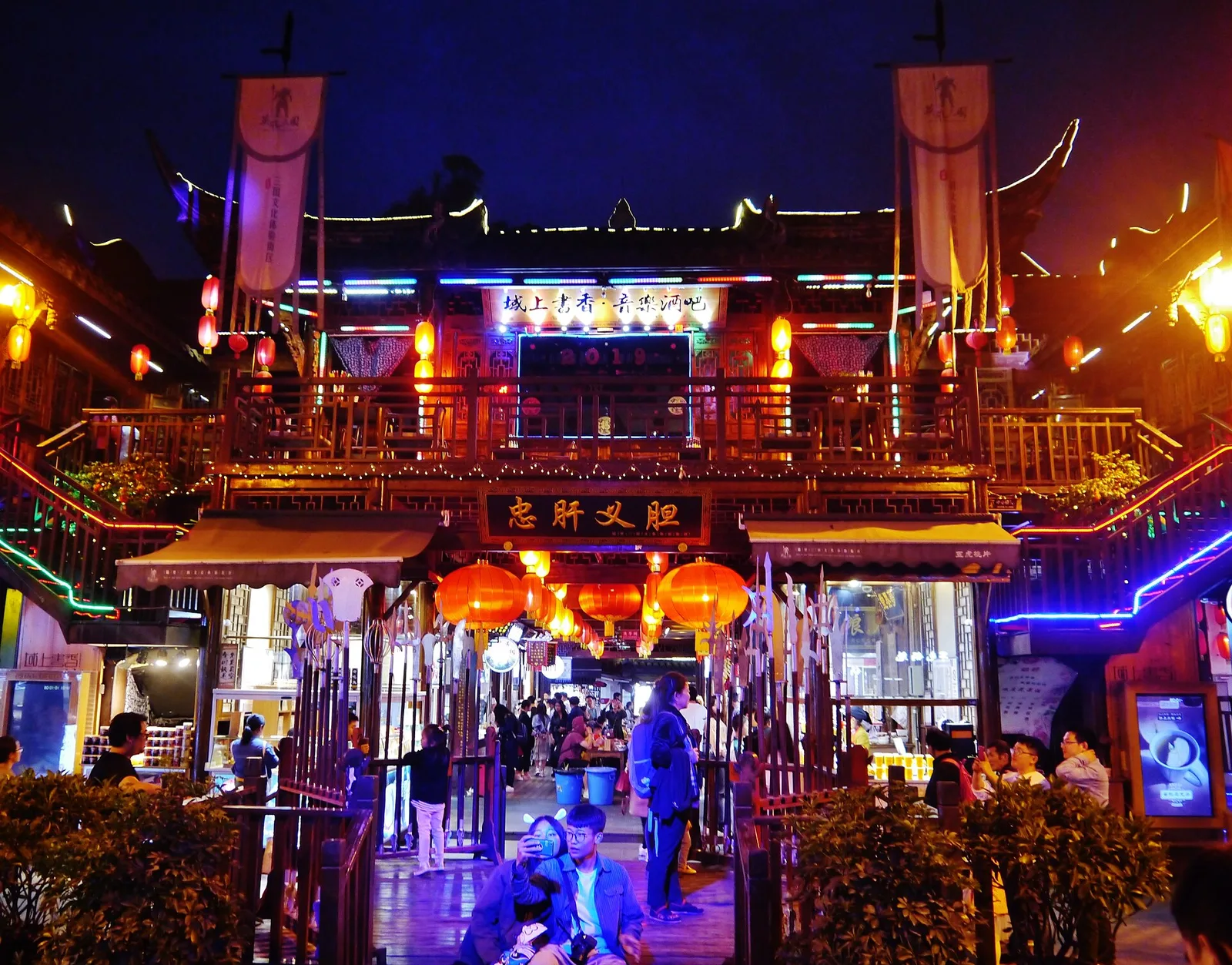
Jinli works best as a mood stop. The architecture is reconstructed rather than ancient, but the scale, lanterns, and snack stalls create an easy introduction to the old-street visual language of Sichuan. It is a convenient place to try several small snacks in one walk and to pick up low-stakes souvenirs.
The street is directly next to Wuhou Shrine, so the natural pairing is one historical site plus one atmospheric street. Do Wuhou Shrine first, then walk through Jinli as the light softens. That sequence gives you context before commerce.
- Sichuan snack stalls and sweets
- Lantern-lit evening photos
- Souvenir and craft shops
- Easy combination with Wuhou Shrine
Timing and crowd strategy
Jinli is open all day and free to enter. Midday is hot, bright, and crowded; late afternoon is more comfortable, and early evening has the best atmosphere. If you want photos without a wall of people, arrive before 10 a.m. or accept that the evening scene is part of the experience.
Weekends and holidays are significantly busier. If your schedule is flexible, use a weekday evening. The street is compact, so you do not need more than 60–90 minutes unless you are stopping for a full meal.
Getting there, costs and a better snack strategy
Jinli sits on Wuhouci Street beside Wuhou Shrine. Metro Line 3 to Gaoshengqiao puts you about a 10-minute walk away, and the route is flat and signed. Taxis and DiDi drop you at the north end, which is convenient but often jammed in the evening; walking from the metro is usually faster than sitting in the last few hundred meters of traffic.
Snack prices sit in the CNY 10–30 range per item, so a graze of four or five small things can cost as much as a proper meal. Pick two or three things you actually want, split them, and stop when you are full. Look for stalls where the food is cooked in front of you: san da pao rice cakes, rabbit head if you eat it, skewers, and freshly fried items. Avoid anything pre-plated and lukewarm under a lamp.
Lanterns come on around dusk, which in summer can be close to 8 p.m. and in winter nearer 6 p.m. The street stays busy until roughly 10–11 p.m., so an early dinner elsewhere and a later walk here is a comfortable combination. If rain is heavy, the stone paving gets slick and the covered sections fill up; plan a tea-house pause rather than pushing through. Verify current prices at the stall before ordering.
- Metro Line 3, Gaoshengqiao, then a 10-minute walk
- Budget CNY 10–30 per snack
- Lanterns on at dusk; busiest until late evening
What to skip and what to expect
Not every stall is worth your appetite. Look for stalls with high turnover and freshly cooked food rather than pre-made items sitting under lights. Prices are higher than in local neighborhoods, which is normal for a tourist street; you are paying for convenience and atmosphere.
The 'ancient' label needs context: Jinli is a reconstruction and a commercial street. If you want a quieter old-town feel, Kuanzhai Alley is more polished, and local neighborhoods such as Yulin or Wangjiang have more everyday life. Jinli is still worth a stop — just do not make it your only Chengdu cultural experience.
Best for
- First-time visitors who want an easy evening atmosphere
- Travelers combining one historical site with snacks and photos
Honest notes
- It is a reconstructed commercial street, not an untouched ancient village.
- Prices are tourist-street prices; compare before buying souvenirs.
- The narrow lane can feel uncomfortably packed on weekends.
Not for
- Travelers looking for quiet, authentic local life
- Anyone who dislikes crowded pedestrian streets
Keep planning