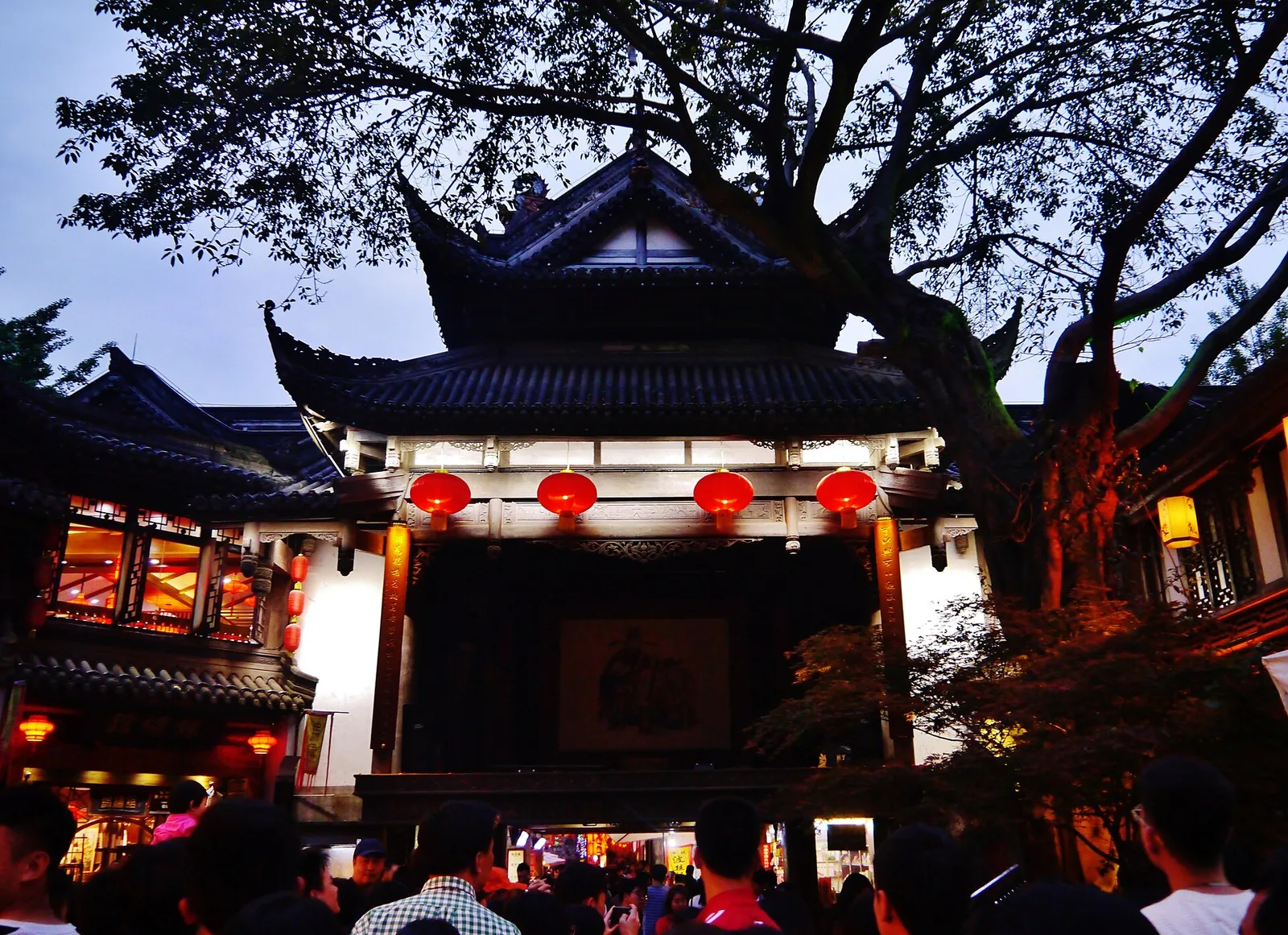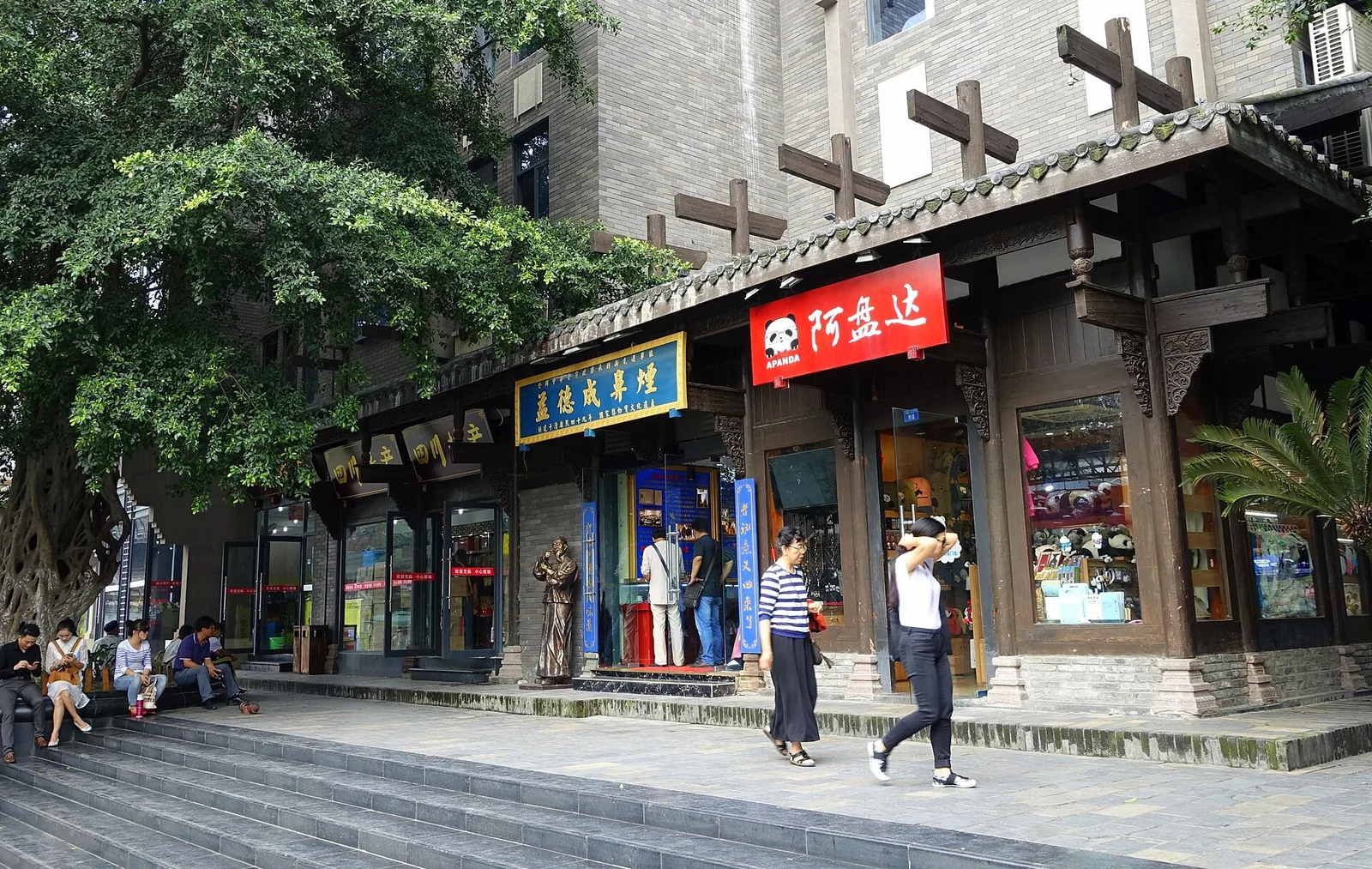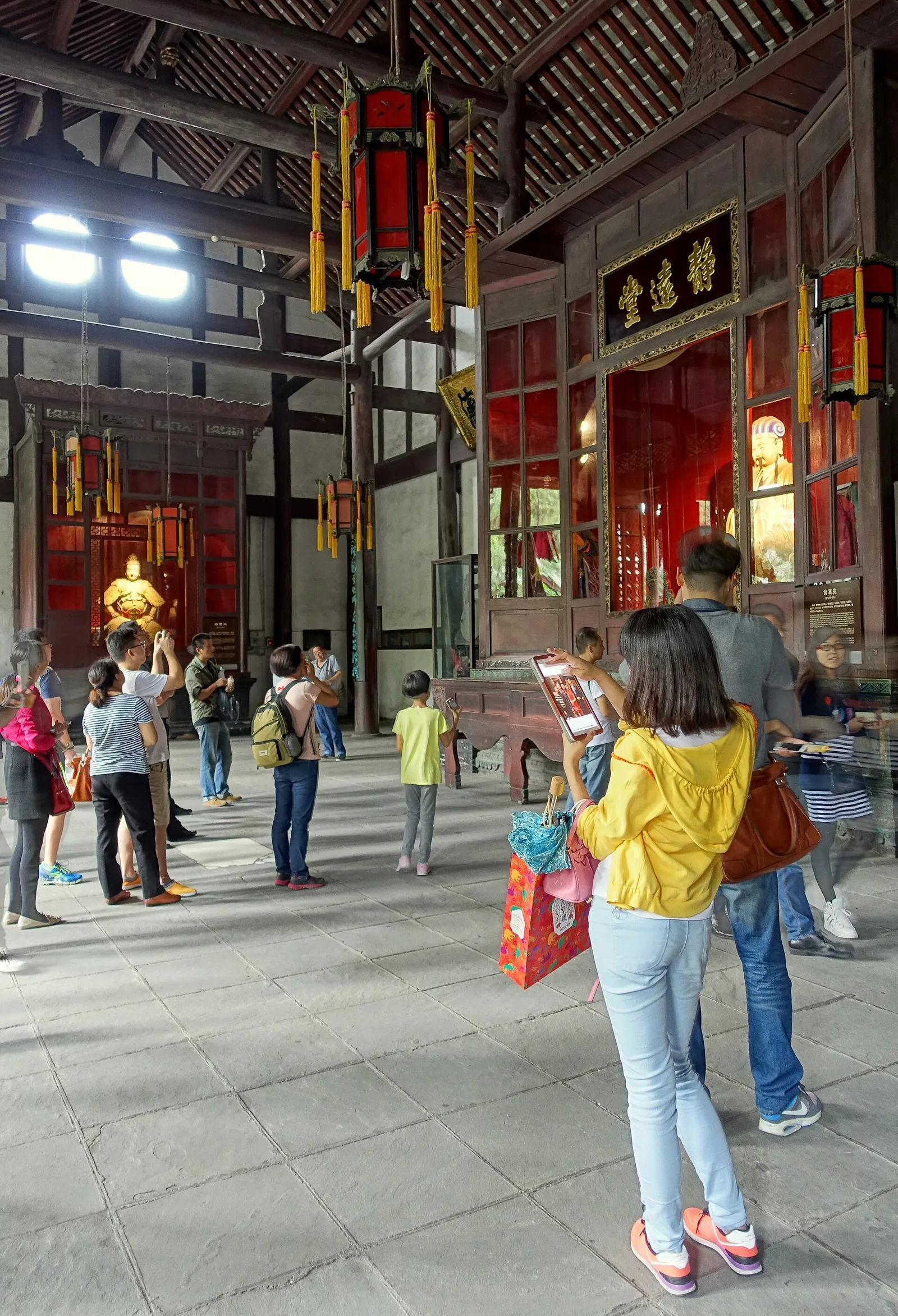
Wuhou Shrine is the most important Three Kingdoms site in Chengdu and one of the city's most pleasant traditional complexes. The red wall and bamboo corridor is the famous photo, but the real value is the context: Liu Bei's tomb, the Hall of Zhuge Liang, and a series of courtyards that explain why this period looms so large in Chinese storytelling. It is a good morning or late-afternoon stop, especially when combined with Jinli next door.
What you are looking at
The complex honors Zhuge Liang, the strategist and statesman of the Shu Han kingdom, and Liu Bei, its first emperor. You walk through gates, courtyards, and halls with statues, inscriptions, and gardens. The famous red wall and bamboo path is near the tomb area and is usually the busiest photo spot.
You do not need deep knowledge of the Three Kingdoms to enjoy it, but a short primer helps. Even a 10-minute read about Zhuge Liang and Liu Bei will make the halls feel less like anonymous statues and more like a story.
- Red wall and bamboo corridor
- Liu Bei's tomb and the surrounding gardens
- Zhuge Liang Hall and Three Kingdoms exhibits
- Easy exit into Jinli Street
Timing, tickets and route
Allow 1.5–2 hours. The site is usually open from morning to late afternoon; check the current hours and ticket price before you go. Arrive early for cooler temperatures and thinner crowds, then walk into Jinli for lunch or snacks.
The nearest metro is Gaoshengqiao on Line 3, followed by a 10–15 minute walk. The route is flat and manageable. If it is raining, the courtyards offer some shelter, but the stone paths can be slippery.
A practical visit plan
Enter through the main gate on Wuhouci Street and follow the standard route: the front halls, the Zhuge Liang hall, the gardens, and Liu Bei's tomb at the back. Most visitors walk the complex in one direction without realizing the red-wall corridor is near the tomb, so save your camera for the second half. If the corridor is packed, loop back after 4 p.m., when tour groups thin out.
Tickets are around CNY 50 and are usually bought at the gate or through an official mini-program; bring your passport. An audio guide, if available, costs extra and is worth it only if you want the full dynastic backstory; the English signage covers the basics. The site generally closes in the late afternoon, with last entry 30–60 minutes before closing, so check current hours before a late start.
Outside the exit, Wuhouci Heng Street has Tibetan shops and small restaurants that make a useful contrast to the polished Jinli lane. For a cheap meal, walk 10 minutes toward Gaoshengqiao for noodle and rice-bowl shops. Rain makes the stone paths slippery; the covered corridors help, but wear shoes with grip.
- Follow the one-way route to Liu Bei's tomb
- Save the red wall for late afternoon
- Check last-entry time, not just closing time
Is it worth it?
Yes, if you want a historical anchor for your Chengdu visit. The complex is well maintained, the gardens are lovely, and the location is convenient. It is not a thrill ride, and children may find the halls repetitive, but the red-wall photo and the Three Kingdoms context make it a solid half-day.
If you have very limited time and care more about food and neighborhoods than dynastic history, you can skip it. Do not skip Jinli if you are already nearby; the two together make a coherent stop.
Best for
- Travelers interested in Chinese history and architecture
- Visitors who want a calm half-day near Jinli
Honest notes
- The historical context matters; without it, the halls can feel similar.
- Children may find the exhibits slow unless you turn it into a story.
- The red-wall photo spot is often crowded.
Not for
- Travelers with no interest in dynastic history
- Families looking for interactive attractions
Keep planning