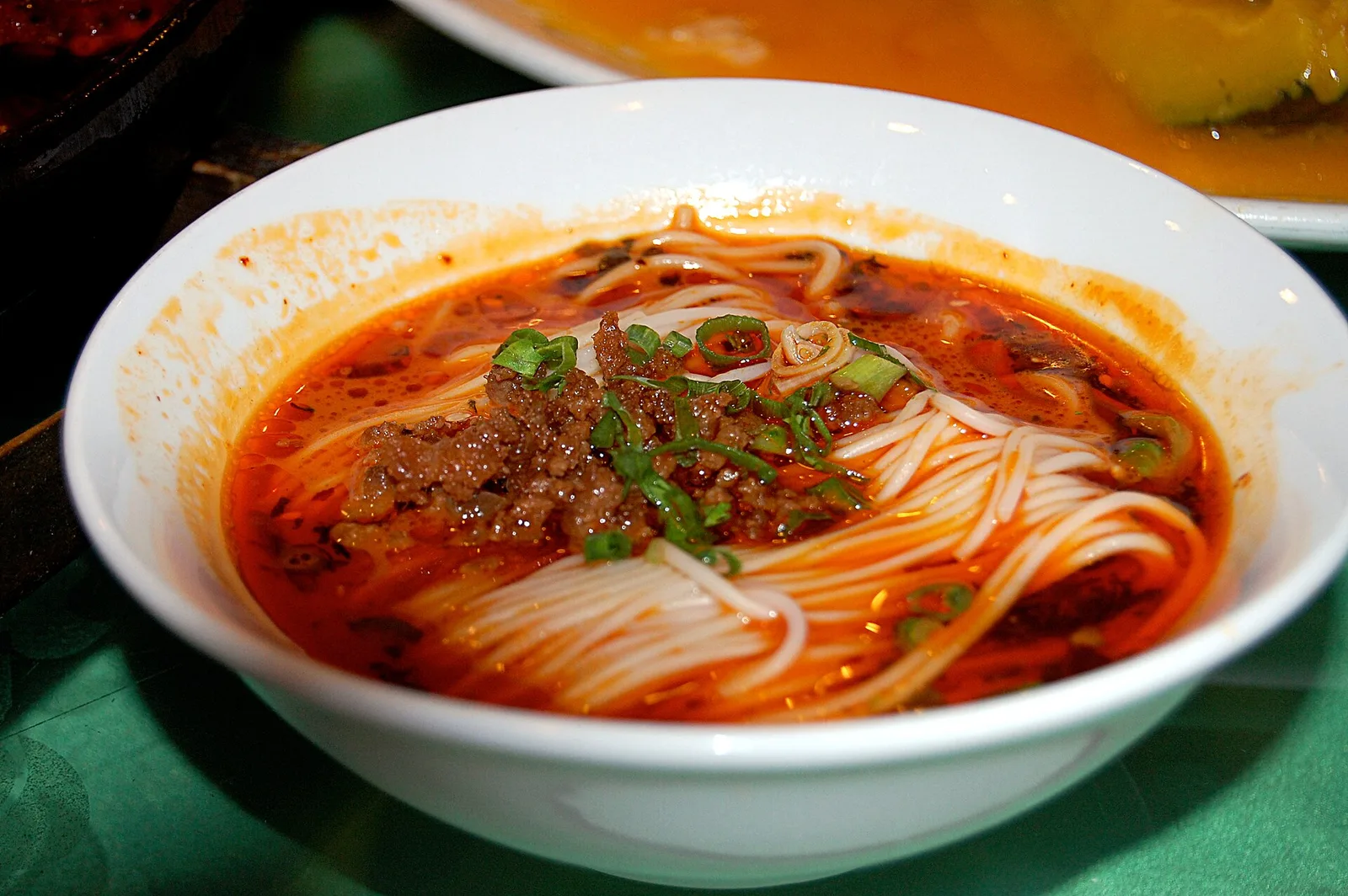
Dan dan noodles are Chengdu's quintessential snack: a small bowl of springy wheat noodles topped with minced pork, preserved vegetables, chili oil, sesame paste, and Sichuan pepper. You mix everything together at the table, and the portion is deliberately small so you can eat it alongside other dishes. It is cheap, fast, and a much better introduction to Sichuan flavors than a bland hotel breakfast.
What is in the bowl
The base is a aromatic chili oil and sesame paste, sometimes with a little soy and vinegar. The topping is minced pork cooked with preserved mustard greens, and the finish is ground Sichuan pepper and scallions. The noodles are usually thin wheat noodles, served warm rather than piping hot.
Mix thoroughly before eating. The noodles are designed to be coated, not soupy. If you do not mix, the first bites will be bland and the last bites will be overwhelmingly spicy.
- Wheat noodles
- Chili oil and sesame paste
- Minced pork
- Preserved vegetables and Sichuan pepper
Heat, cost and where to eat
Dan dan noodles are usually medium-hot, with a strong sesame and chili aroma. Ask for 'shǎo là' (less spicy) if needed. The bowl costs around CNY 10–20, making it one of the best-value meals in the city. It is often served at noodle shops, snack counters, and Sichuan restaurants.
Look for shops with a steady local queue and a simple menu. Tourist-area versions can be twice the price and half the flavor. The famous Long Chao Shou chain also serves dan dan noodles, which is a convenient if not extraordinary option.
Portions, timing and local habits
Order by weight: 'yī liǎng' is a small bowl, 'èr liǎng' is a normal snack portion, and 'sān liǎng' is a full meal for a hungry person. Prices scale with the portion, usually a few yuan between sizes. Locals often eat dan dan noodles as a mid-morning or lunch snack, then have another small dish elsewhere; the noodles are not meant to be a three-course meal.
Many shops sell out of their best components by early afternoon, and some close after lunch entirely. Go between 11 a.m. and 1 p.m. for the freshest batch, or expect a shorter menu later. At peak lunch, a busy shop may have a 10–20 minute queue that moves quickly because people eat and leave. Do not linger over the bowl; the tables turn fast.
Mix immediately and eat while the noodles are warm, before they clump. A splash of black vinegar cuts the oil; a pool of chili oil at the bottom of the bowl is normal, so do not drink it. If you want a fuller meal, add a bowl of wontons or a cold vegetable dish. After eating, a nearby tea house is a better rest stop than a dessert shop.
- One liang is a snack; two is a light meal
- Go before 1 p.m. for the full menu
- Add vinegar, not water, to cut the oil
Dietary notes and meal planning
The dish contains wheat, pork, soy, and sesame. It is not gluten-free. Vegetarian versions exist but are less common; ask for 'sù de dàn dàn miàn' and confirm no meat sauce. Because the portion is small, pair it with a side dish or another snack rather than expecting a full meal.
Dan dan noodles are a good lunch stop during a sightseeing day. They are fast, filling, and easy to order with a picture menu. They are less suitable for a relaxed dinner; the pace is quick and the seating is often basic.
Best for
- Budget travelers and quick lunch stops
- Visitors who want a small taste of several dishes
Honest notes
- The portion is small; it is not a full meal on its own.
- Some versions are much oilier than others.
- Not suitable for gluten-free diets.
Not for
- People with celiac disease
- Anyone expecting a large bowl of soup noodles
Keep planning