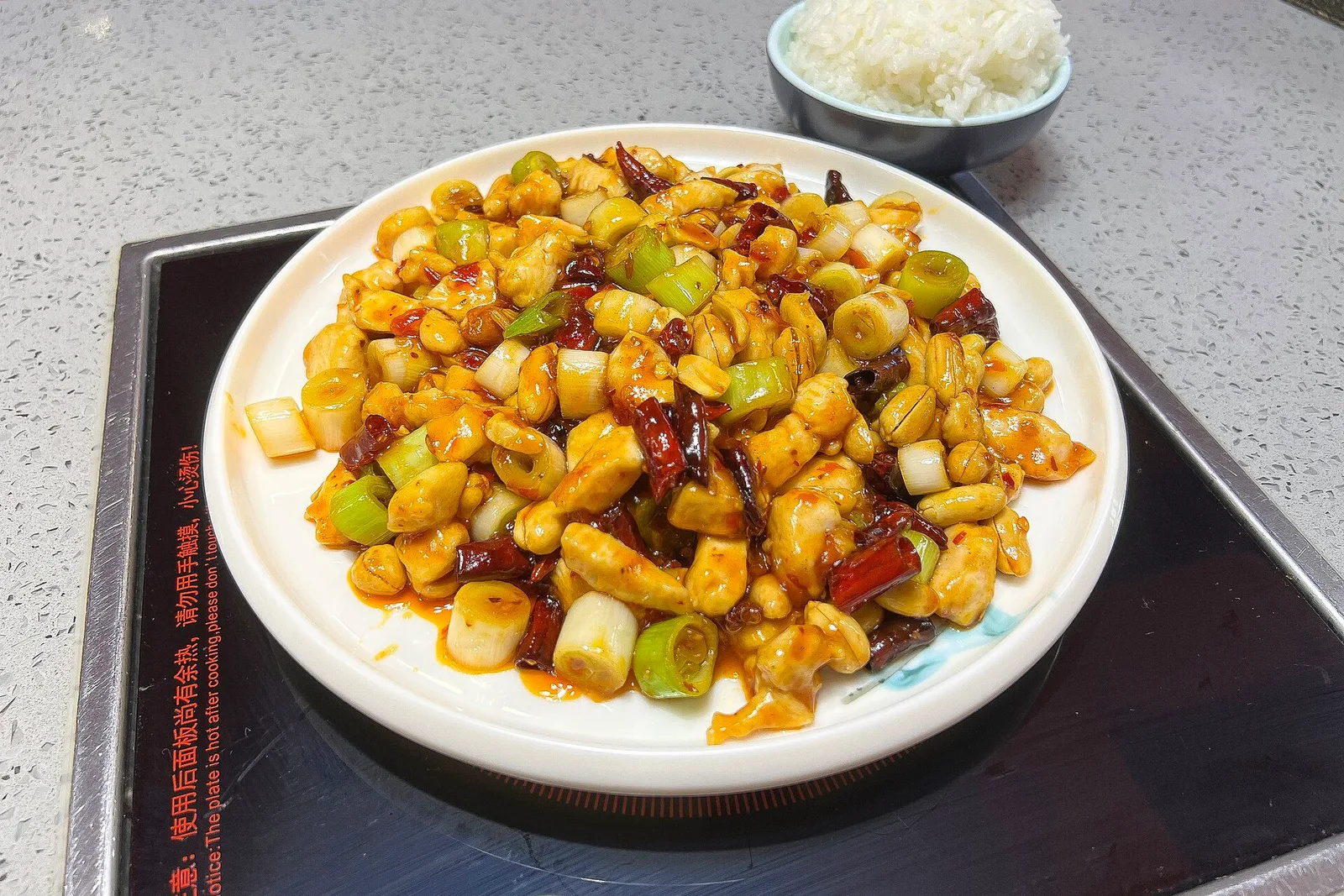
Kung pao chicken is the Sichuan dish most visitors already think they know. The Chengdu version is usually less sweet and more aromatic than the takeout version abroad: diced chicken, peanuts, dried red chilies, scallions, and a glossy sauce made with black vinegar, sugar, and soy. It is a reliable order for mixed groups and a good introduction to the idea that Sichuan food is not only about heat.
What makes the Chengdu version different
The classic recipe uses chicken thigh, not breast, for juiciness. The chilies are added for aroma rather than pure heat, and the sauce balances sour, sweet, and savory. Peanuts provide crunch. Good versions are not swimming in sauce; the coating should cling to each piece.
Some restaurants add vegetables such as cucumber or bell pepper. That is a variation, not a flaw, but the core should still be chicken, peanuts, and dried chilies. If you see a thick, bright-red sweet sauce, you are probably at a tourist-oriented restaurant.
- Diced chicken thigh
- Roasted peanuts
- Dried red chilies
- Black vinegar, sugar, and soy sauce
Heat, cost and dietary notes
Kung pao chicken is usually mild-to-medium: the dried chilies look dramatic but are often not eaten whole. If you are sensitive, ask for fewer chilies. The dish contains peanuts, so it is not suitable for a peanut allergy unless the kitchen can guarantee no cross-contact, which is difficult in a wok kitchen.
Expect CNY 30–50 at a mid-range restaurant. It is a shared dish, best with rice and a green vegetable. It is also one of the safest choices for children or visitors who are nervous about Sichuan pepper.
History, ordering and the lunch version
The dish is named after Ding Baozhen, a Qing official whose title included 'gong bao'; the story is retold on menus across the city with varying details. What matters at the table is the balance: black vinegar and sugar should be present but not dominant, the peanuts should be crisp, and the chicken should taste of chicken rather than sauce. If the first bite is mostly sweet, the kitchen is cooking for tourists.
At lunch, many rice-bowl shops serve kung pao chicken over rice for CNY 15–25, which is a cheap and reliable meal. At dinner, it is one shared dish among several and costs roughly CNY 30–50 at a mid-range restaurant. Ask for 'shǎo là' or 'bù yào làjiāo' if you want fewer dried chilies; the chilies are mostly for aroma and are not meant to be eaten whole.
Because wok kitchens use the same oil and equipment for everything, a serious peanut allergy is difficult to accommodate even if you ask. If the allergy is severe, choose a different dish. For children, kung pao is one of the safest Sichuan orders, along with egg-and-tomato and sweet-and-sour dishes. Pair it with rice and a plain vegetable rather than another sweet dish.
- Lunch sets cost CNY 15–25
- The dried chilies are for aroma, not eating
- Severe peanut allergies should skip it
When to order it
Order kung pao chicken when you want a break from numbing heat, when you are eating with people who have different spice tolerance, or when you want a dish that resembles familiar Chinese takeout without the sugar overload. It is not the most adventurous choice, but it is a useful anchor on a shared table.
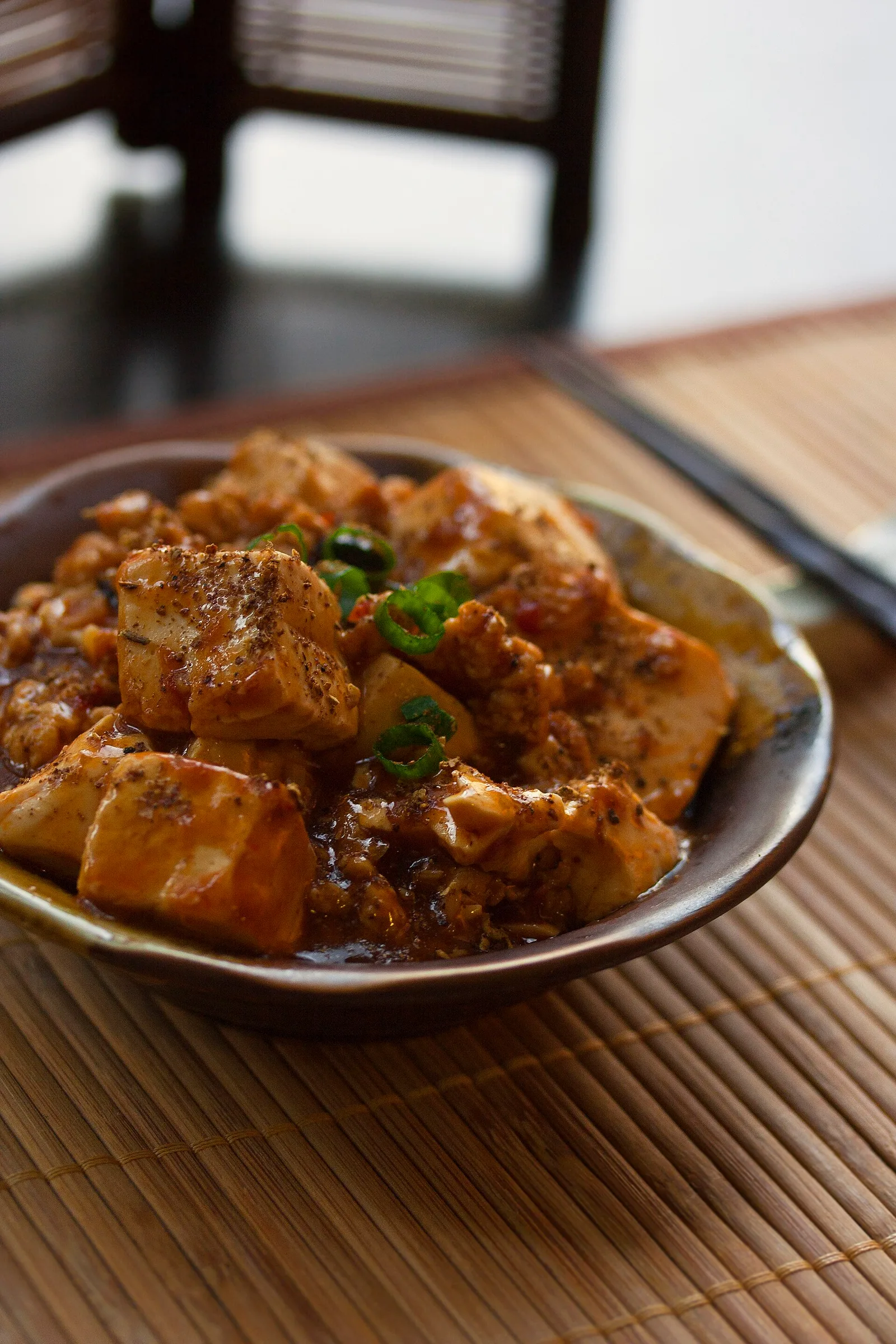
Skip it if you are looking for the deeper, funkier flavors of Chengdu. In that case, order mapo tofu, twice-cooked pork, or a cold chicken dish with chili oil. Kung pao is a crowd-pleaser, not the city's most distinctive plate.
Best for
- Families and mixed-spice groups
- Visitors who want a familiar, mild Sichuan dish
Honest notes
- It is not a spicy dish despite the visual chili count.
- Tourist restaurants sometimes make it too sweet.
- Peanut allergy handling is difficult to guarantee.
Not for
- Travelers with a peanut allergy
- Anyone seeking the city's boldest flavors
Keep planning