Sichuan hotpot is not just spicy food; it is a social format. You sit around a divided pot, order raw plates, cook them yourself, and build a dipping sauce to your taste. Chengdu hotpot tends to be beef-tallow based, aggressively numbing, and served late into the night. It is the single most memorable meal many visitors have here — and the one most likely to overwhelm a first-timer if you order blindly.
What you are ordering
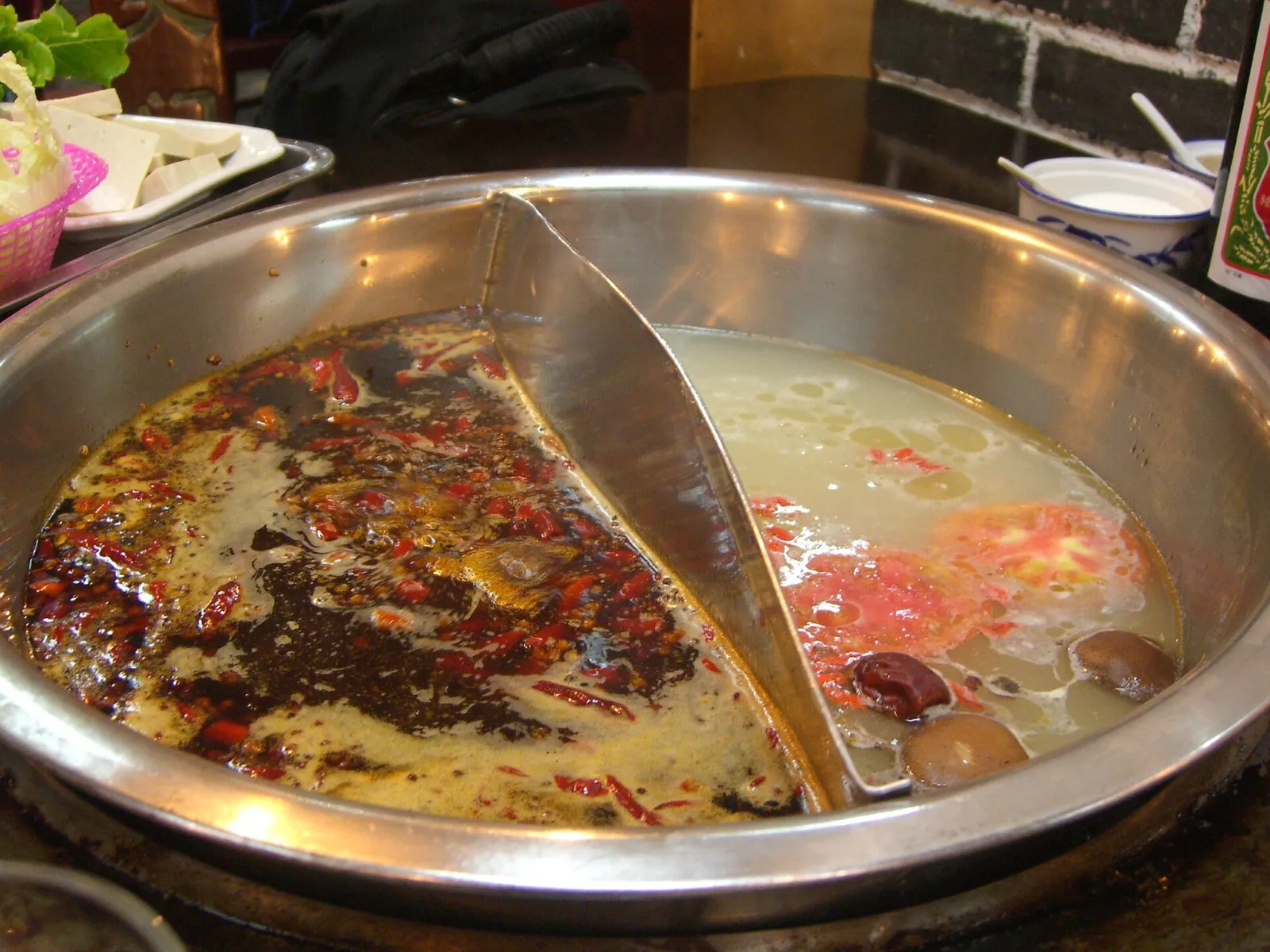
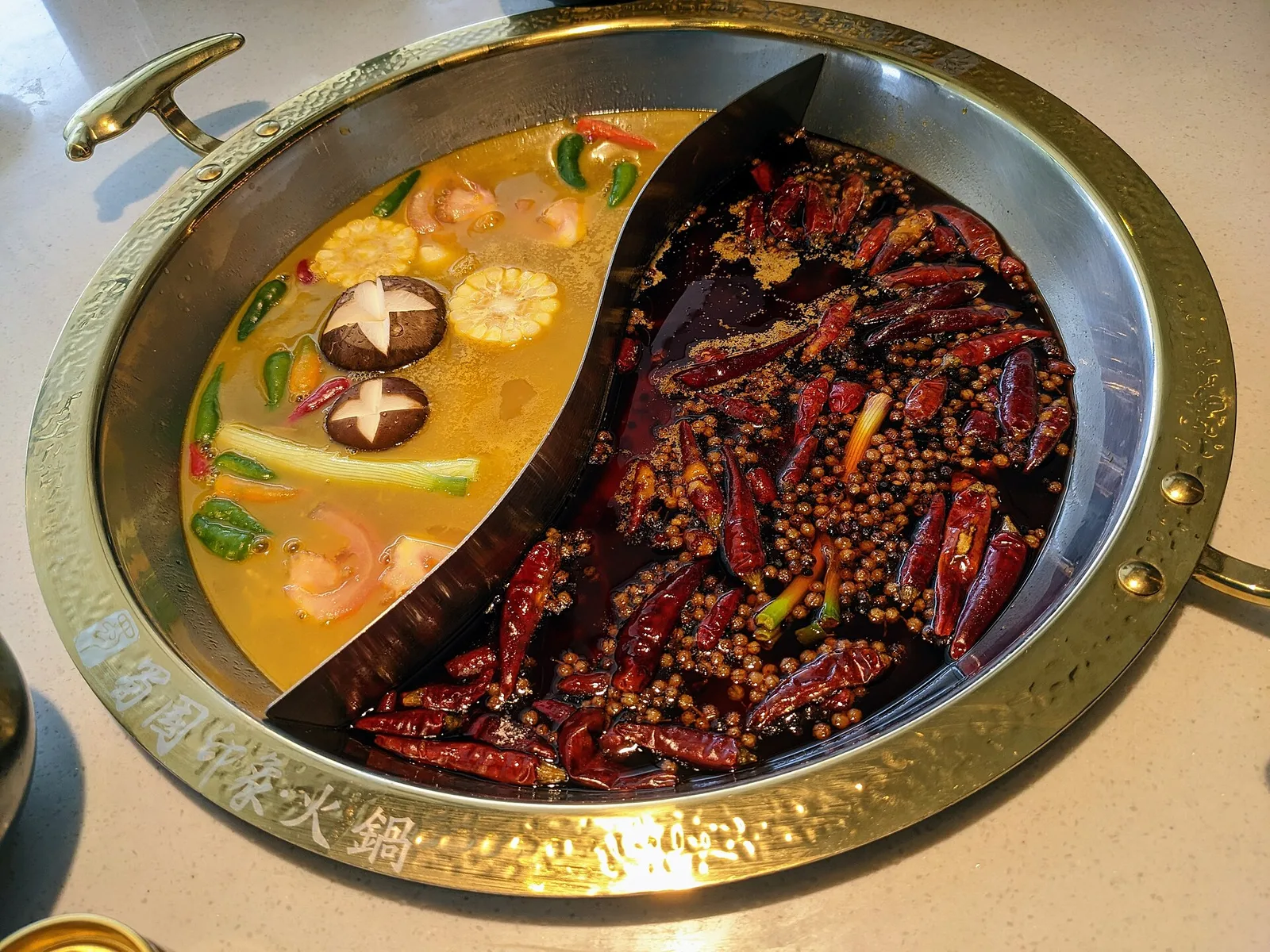
The pot usually comes as yuanyang — a divided pot with a mild broth on one side and a spicy beef-tallow broth on the other. The spicy side is flavored with dried chilies, Sichuan pepper, ginger, and fermented bean paste. The mild side is often a bone broth or tomato broth, though vegetarian broths exist at some restaurants.
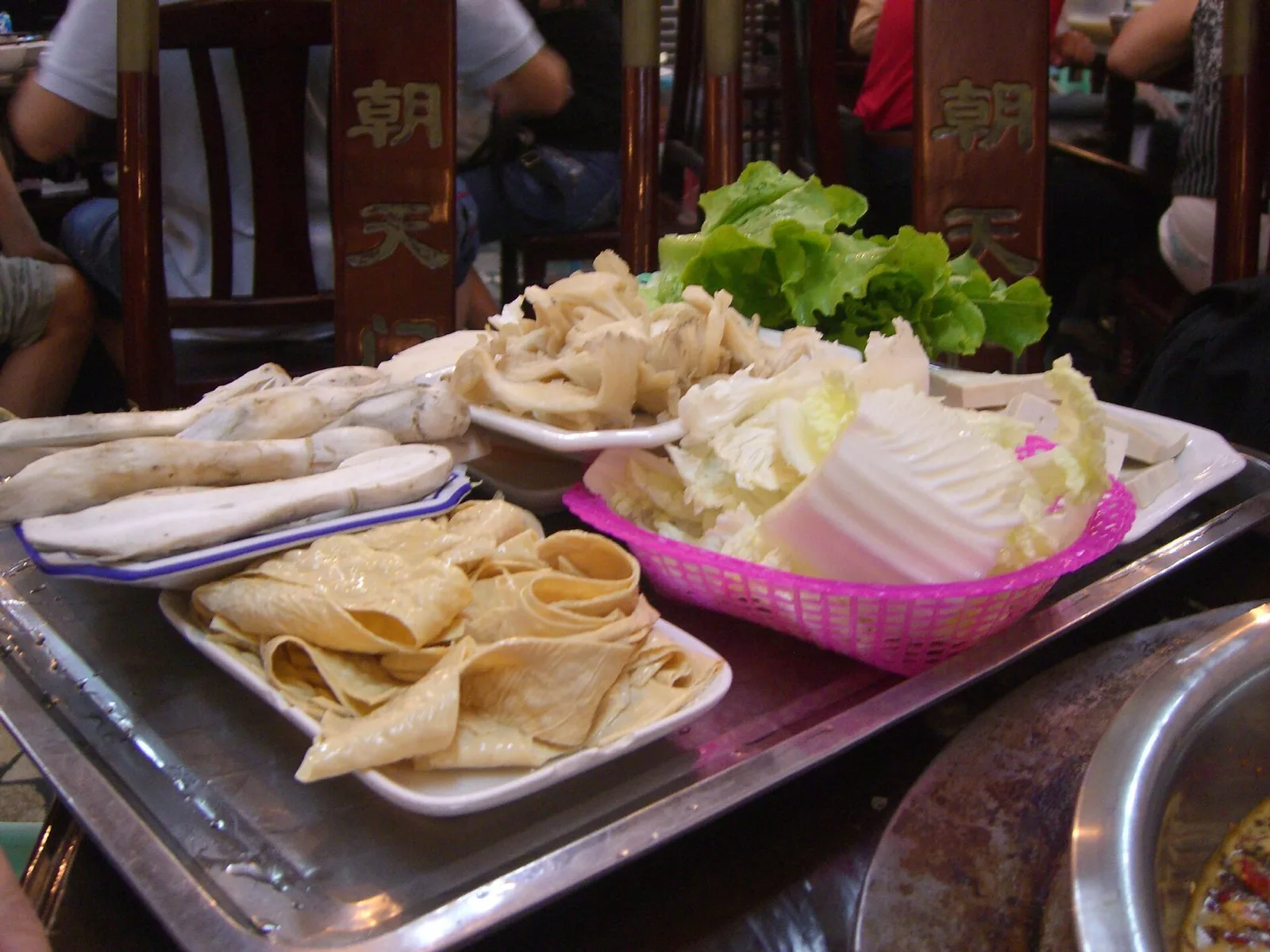
Order a mix of quick-cooking and slow-cooking items: thinly sliced beef or lamb, tripe, duck intestine, shrimp paste, fish balls, tofu skin, lotus root, potato slices, and leafy greens. The server will tell you how long each item needs. When in doubt, ask for 'niú ròu' (beef) and 'tǔ dòu piàn' (potato slices) as safe starters.
- Yuanyang pot: half mild, half spicy
- Beef or lamb slices, tripe, shrimp paste
- Tofu skin, lotus root, potato, leafy greens
- Sesame oil, garlic, cilantro, and vinegar for the dip
How to manage the spice
The dip is your heat control. Chengdu locals use a small bowl of sesame oil with garlic and cilantro; the oil coats your mouth and tempers the chili. Add vinegar if you want less heat, and avoid drinking the broth straight. Milk, yogurt, or a sweet drink helps more than water.
Ask for 'wēi là' (mild) or 'bù là' (not spicy) when ordering, but understand that 'mild' in Chengdu is still flavorful and can be hot for visitors. If you have a sensitive stomach, choose the mild side and avoid the fattiest meats on the first night. Do not schedule hotpot before a long travel day.
Timing, queue strategy and the bill
Hotpot restaurants hit their peak between about 6:30 and 8:30 p.m., especially Thursday through Sunday. Popular chains hand out queue numbers and may quote an hour or more; going at 5:30 p.m. or after 8:30 p.m. usually gets you seated faster. Lunch hotpot is cheaper, quieter, and increasingly common, though the atmosphere is flatter.
The broth base is often charged separately, roughly CNY 30–70 depending on the pot and the restaurant, and drinks and sides add up. A QR-code menu is standard; if there is no English version, point at photos or use a translation app. Ask for the bill with 'mǎi dān' and check the item count if you ordered by the plate.
Neighborhood hotpot in areas such as Yulin, Shuangnan, and along the older streets tends to be cheaper and less polished than the big chains. A late meal here often ends with a walk rather than dessert; the oil and chili sit heavy, and a slow stroll helps. In summer, expect strong air conditioning and a wait for outdoor tables; in winter, the queue moves faster because people eat earlier.
- Arrive before 6 p.m. or after 8:30 p.m.
- Base broth is often a separate charge
- Check the item count before paying
Cost, locations and etiquette
Expect about CNY 80–150 per person before drinks, depending on how much meat you order. Popular chains and tourist-area restaurants charge more; neighborhood spots are cheaper and often better. Reservations are useful on weekends. The meal usually takes two hours, and the pace is slow and social.
Do not put cooked food back into the pot with your personal chopsticks if you are sharing with people who care about hygiene; use the serving ladle. Ask for the bill with 'mǎi dān' (buy the bill). Tipping is not expected. If you are vegetarian, confirm that the mild broth is not made with meat and that the dipping sauce does not contain oyster sauce.
Best for
- Groups who want a long, sociable dinner
- Travelers who enjoy spicy and numbing flavors
Honest notes
- The spicy broth can be too much for visitors with sensitive stomachs.
- Vegetarian hotpot requires a dedicated broth; ask carefully.
- The strongest-smelling restaurants are not necessarily the best.
Not for
- Travelers with a low spice tolerance and no interest in adjusting
- People who prefer quiet, fast meals
Keep planning