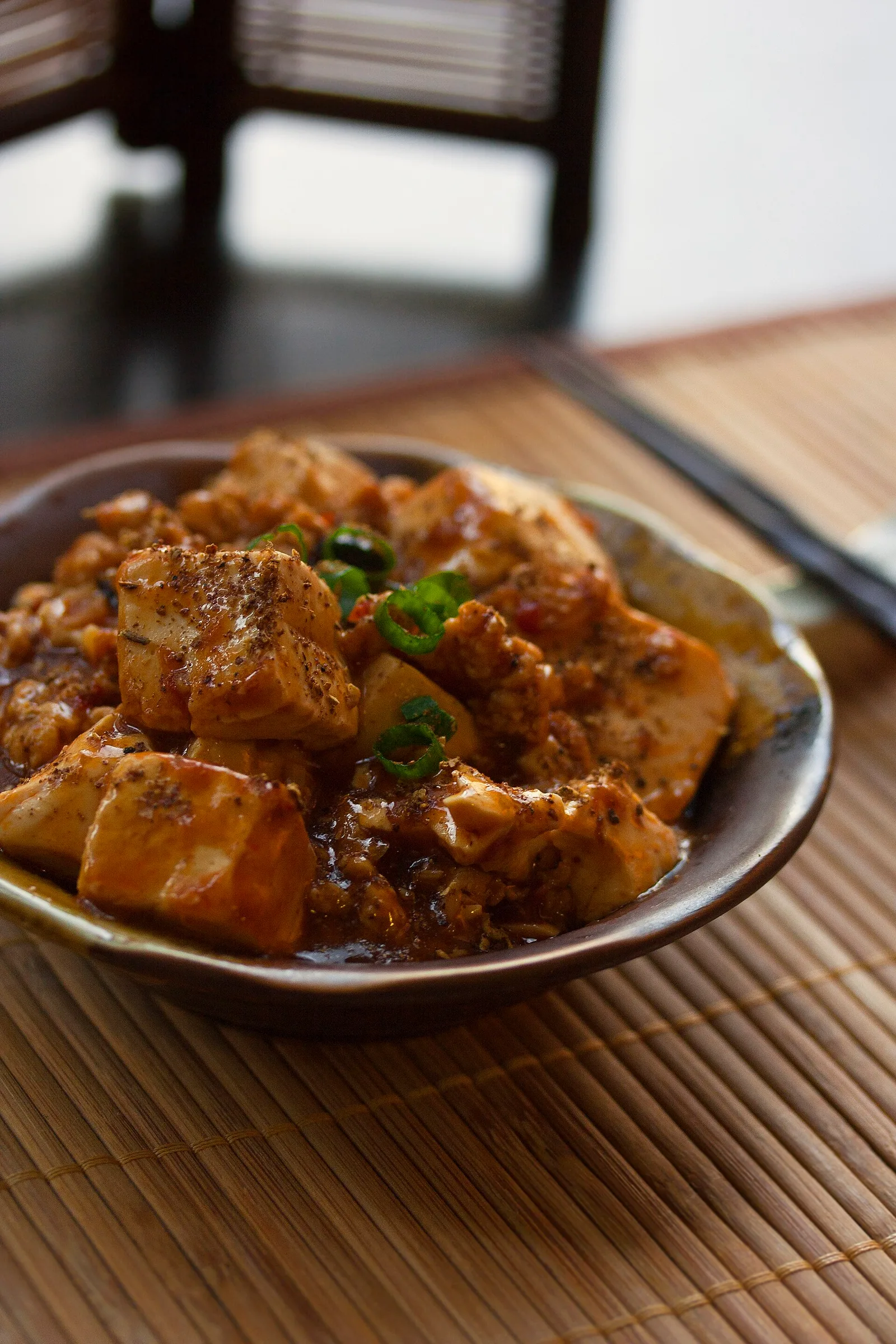
Mapo tofu is the dish that best explains Sichuan flavor in a single bowl: soft tofu, a savory chili-bean sauce, a gentle numbing tingle from Sichuan pepper, and a little minced meat for depth. It is served everywhere in Chengdu, from cheap rice kitchens to formal restaurants, and it is usually one of the mildest of the famous Sichuan dishes — though 'mild' is relative.
What it tastes like
The sauce is built from doubanjiang (fermented broad-bean chili paste), fermented black beans, garlic, ginger, and stock. The Sichuan pepper is added late, so the numbing sensation hits after the initial savory heat. Good mapo tofu is glossy but not oily, and the tofu should be soft enough to eat with a spoon.
The traditional version contains minced beef or pork. Many restaurants can make it without meat, but the sauce may still contain meat-based stock. If you are vegetarian, ask explicitly and choose a restaurant that understands the request.
- Soft or silken tofu
- Fermented chili-bean paste
- Minced beef or pork
- Sichuan pepper finish
Heat, cost and how to order
Mapo tofu is usually medium-hot: flavorful rather than punishing. Ask for 'wēi là' if you want it milder, or 'bù là' if you need no chili at all, though the dish loses its identity without some heat. It is normally served with steamed rice, which is the best way to balance each bite.
A single portion costs roughly CNY 20–40 at a neighborhood restaurant and more at upscale places. It is a shared dish in a multi-course meal, not usually a solo main. Pair it with a vegetable, a cold cucumber salad, or a mild soup.
Ordering it in a real Chengdu meal
Mapo tofu is almost never a solo order. A typical table of two orders two or three dishes plus rice, and mapo tofu is one of them. Rice is charged per bowl, usually a few yuan, and refills are sometimes free; ask. A cold cucumber salad, a plate of leafy greens, or a mild egg-and-tomato dish balances the oil and heat. If you order a soup, keep it simple.
Lunch service runs roughly 11:30 a.m. to 1:30 p.m. and is the busiest window at popular restaurants; arriving at 11:15 or after 1:30 avoids the worst queue. Dinner peaks between 6 and 8 p.m. Many rice-bowl shops serve mapo tofu over rice as a set for CNY 15–25, which is the cheapest way to try it. At a sit-down restaurant, expect CNY 25–45 for the dish itself.
Ask for 'shǎo là' (less spicy) rather than 'bù là' if you want the flavor without the full burn; a completely non-spicy version is a different dish. If you are vegetarian, confirm both the minced meat and the stock, because some kitchens use chicken stock without listing it. The numbing tingle comes from ground Sichuan pepper; if you dislike it, ask them to hold it, though purists will object.
Where to try it and what to avoid
You do not need a famous restaurant. Busy local Sichuan restaurants and rice-bowl shops often do a better, cheaper version than tourist-facing chains. The Chen Mapo Tofu brand is the most famous, but it is also touristy and more expensive; go for convenience, not pilgrimage.
Avoid mapo tofu that looks separated or overly oily, and be cautious at buffets where it has been sitting out. If you have a soy allergy, this dish is off the table. If you are gluten-free, confirm the soy sauce and bean paste used.
Best for
- First-time visitors who want a manageable Sichuan classic
- Travelers who like tofu and savory sauces
Honest notes
- Traditional versions contain minced meat.
- The numbing sensation is unusual if you have never had Sichuan pepper.
- Tourist-friendly versions can be bland or overpriced.
Not for
- People with soy allergies
- Anyone who wants zero chili heat
Keep planning