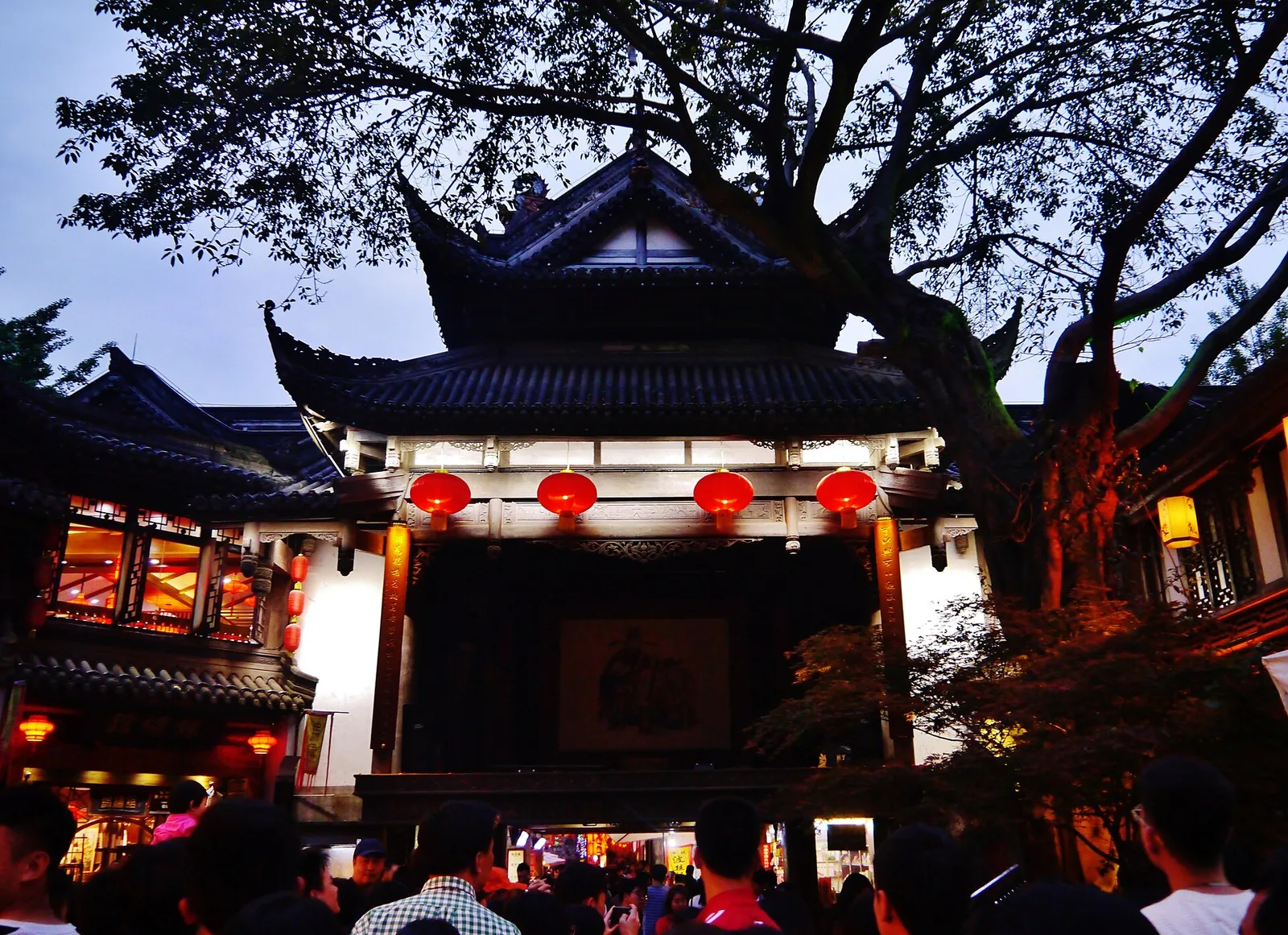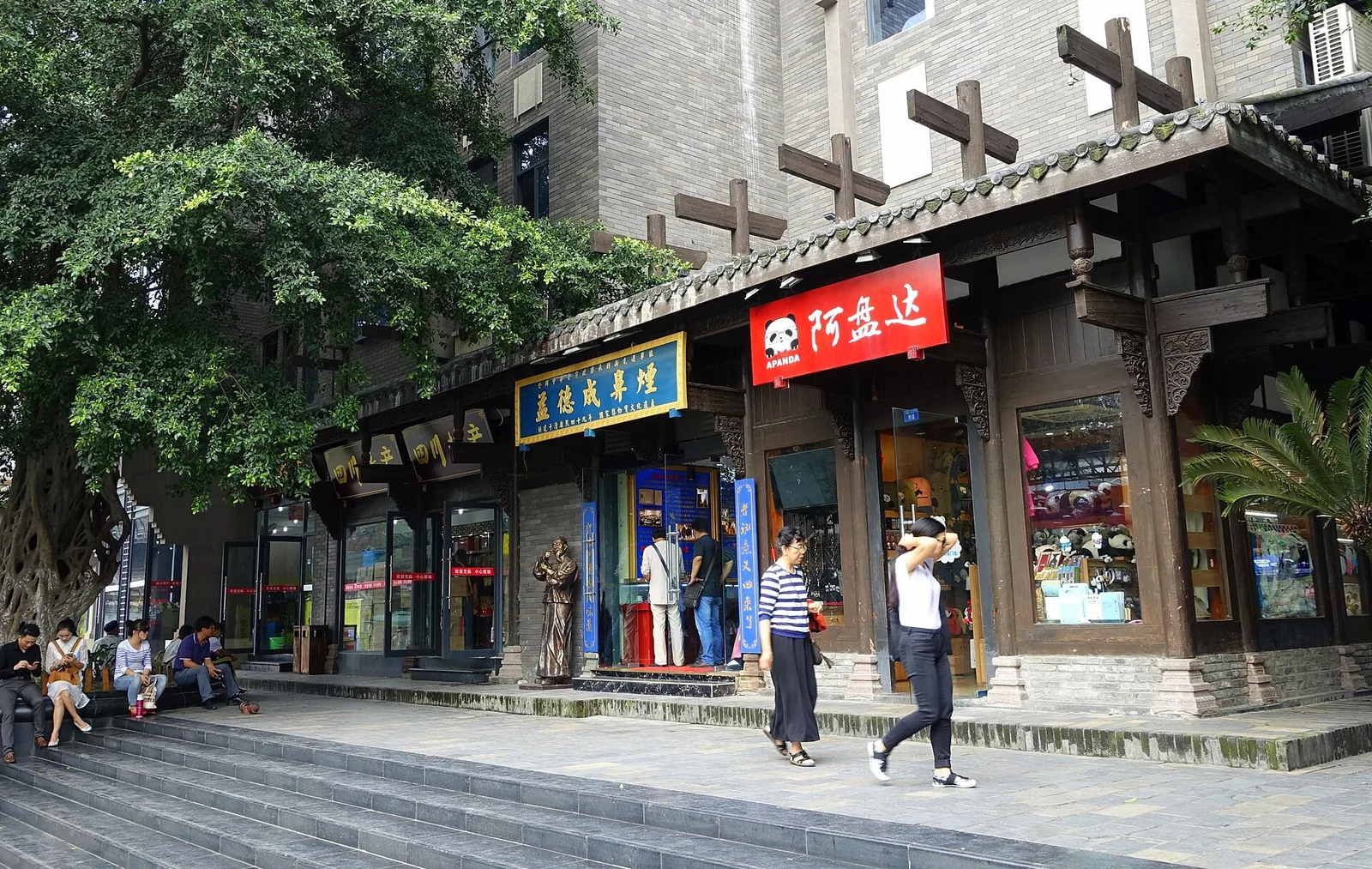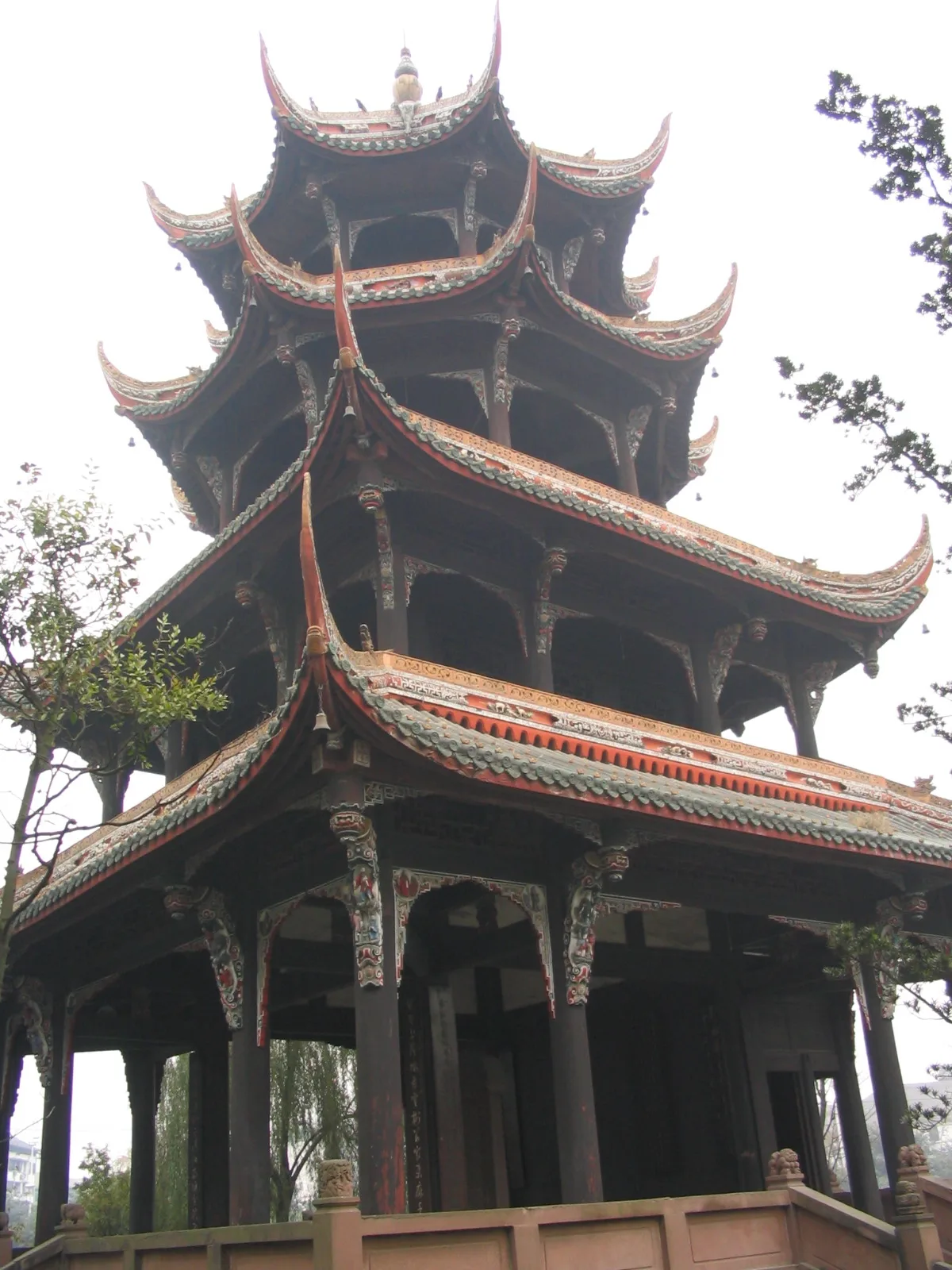
Wangjiang Pavilion Park is a bamboo garden on the south bank of the Jinjiang River, built around the memory of the Tang dynasty poet Xue Tao. The park has hundreds of bamboo species, shaded paths, a riverside promenade, and several teahouses. The free garden is where locals walk, sing, and drink tea. A walled heritage area holds the Wangjiang Tower, the Xue Tao Well, and a memorial hall, and it charges a small ticket. If People's Park feels too busy, this is the quieter version.
A park built around a poet
Xue Tao was a Tang dynasty poet and courtesan who lived in Chengdu and is associated with a small, red-tinted writing paper known as Xue Tao note paper. The park's heritage area preserves the Xue Tao Well, where water was traditionally said to be used for making the paper, and a memorial hall that explains her life and work. The displays are modest and mostly in Chinese, but the setting does most of the work.
The park is also a serious bamboo collection, with hundreds of species from across China and beyond. Paths wind through dense groves, and labels identify some of the varieties. Spring is the best time to see new shoots; summer has the deepest shade; autumn and winter are quieter. The bamboo is the reason to come even if the poetry means nothing to you.
- Xue Tao Well and memorial hall
- Hundreds of bamboo species
- Riverside paths
- Quiet teahouses
The free garden and the paid heritage area
The park is split into two parts. The large garden and riverside area are free and open from early morning to around 9 p.m. This is where the teahouses, bamboo groves, and exercise groups are. The smaller walled heritage area, entered from the north side, holds the Wangjiang Tower, also called Chongli Pavilion, the Xue Tao Well, and the memorial hall. It normally opens around 9 a.m. and closes in the late afternoon, with a ticket of about CNY 20; verify the current price and closing day, because some reports list a Monday closure.
The tower is the visual anchor, a multi-story wooden structure overlooking the river. Climbing it may be included in the heritage ticket or may cost a small extra fee depending on the day. The view is over the river and treetops rather than the skyline, which is the point. The heritage area takes about 45 minutes; the free garden can absorb another hour or two.
Do not expect a major museum. The exhibits are small, and the English signage is limited. The pleasure is the combination of bamboo, river light, and a poet's story, not a dense historical download.
Teahouses, timing and weather
The teahouses are the park's other draw. They are cheaper and calmer than the famous Heming Teahouse, with covered-bowl tea usually in the CNY 10 to 30 range. Locals play cards, chat, and sit for hours. The riverside seats are the best on a mild day. There is also a simple snack menu, but the food is not the reason to come.
Mornings are liveliest for exercise and singing; weekday afternoons are the quietest. Weekends bring families and photographers, especially in spring and autumn when the light is softer. Summer is hot and humid, though the bamboo shade helps, and mosquitoes are active near the water. Bring repellent. Winter is gray but peaceful, and the teahouses are still open.
Rain does not ruin a visit if you settle into a teahouse, but the paths get slick. The park is mostly flat, with some steps in the heritage area and the tower.
Getting there and how it fits a day
The park is on Wangjiang Road, on the south bank of the Jinjiang River, near the Sichuan University Wangjiang campus. Metro Line 6 to Sanguantang, Exit B, leaves a 5 to 10 minute walk to the south gate. A DiDi from central Chengdu takes 15 to 25 minutes. The surrounding streets are busy at rush hour, so the metro is often more predictable.
This is a good half-day pairing with the Sichuan University neighborhood, where there are cheap noodle shops and student cafes. It is less convenient for the central sights, so do not force it into a packed day. If you are choosing between parks, come here for bamboo and quiet, and go to People's Park for the matchmaking corner and the classic teahouse scene. The teahouse culture guide explains what to order and how the seating works.
For a slower day, combine the park with a river walk and an early dinner, or with the Du Fu Thatched Cottage if you have a car or do not mind a longer taxi. The park rewards a loose plan: choose a teahouse, walk the bamboo paths, see the tower, and leave the rest of the afternoon open.
The park is a low-cost stop: the garden is free, the heritage area is about CNY 20, and tea is cheap. Check the best time page for seasonal weather before you commit to an outdoor afternoon.
Best for
- Travelers who want a quiet bamboo garden and a local teahouse
- Poetry readers and anyone avoiding the central crowds
Honest notes
- The heritage area is small and the English displays are limited.
- Metro access involves a 5–10 minute walk, and the park is not on the central sightseeing loop.
- The tower view is over the river and trees, not a panoramic city skyline.
- Summer mosquitoes near the water are persistent.
Not for
- Visitors looking for a major historical attraction
- Travelers with a tight schedule and no interest in parks
Keep planning