Bobo chicken is Chengdu street food in its most casual form: a tray of cold skewers, a bowl of glossy broth, and a stool on the pavement. You choose skewers from a display, the vendor dips them in chili oil or sesame broth, and you pay by the stick. The ingredients are often chicken parts, tofu skin, lotus root, and vegetables, all served cold or at room temperature. It is cheap, fast, and easy to try, though the hygiene and spice can surprise visitors. It is also one of the best ways to eat like a local on a small budget.
How bobo chicken works
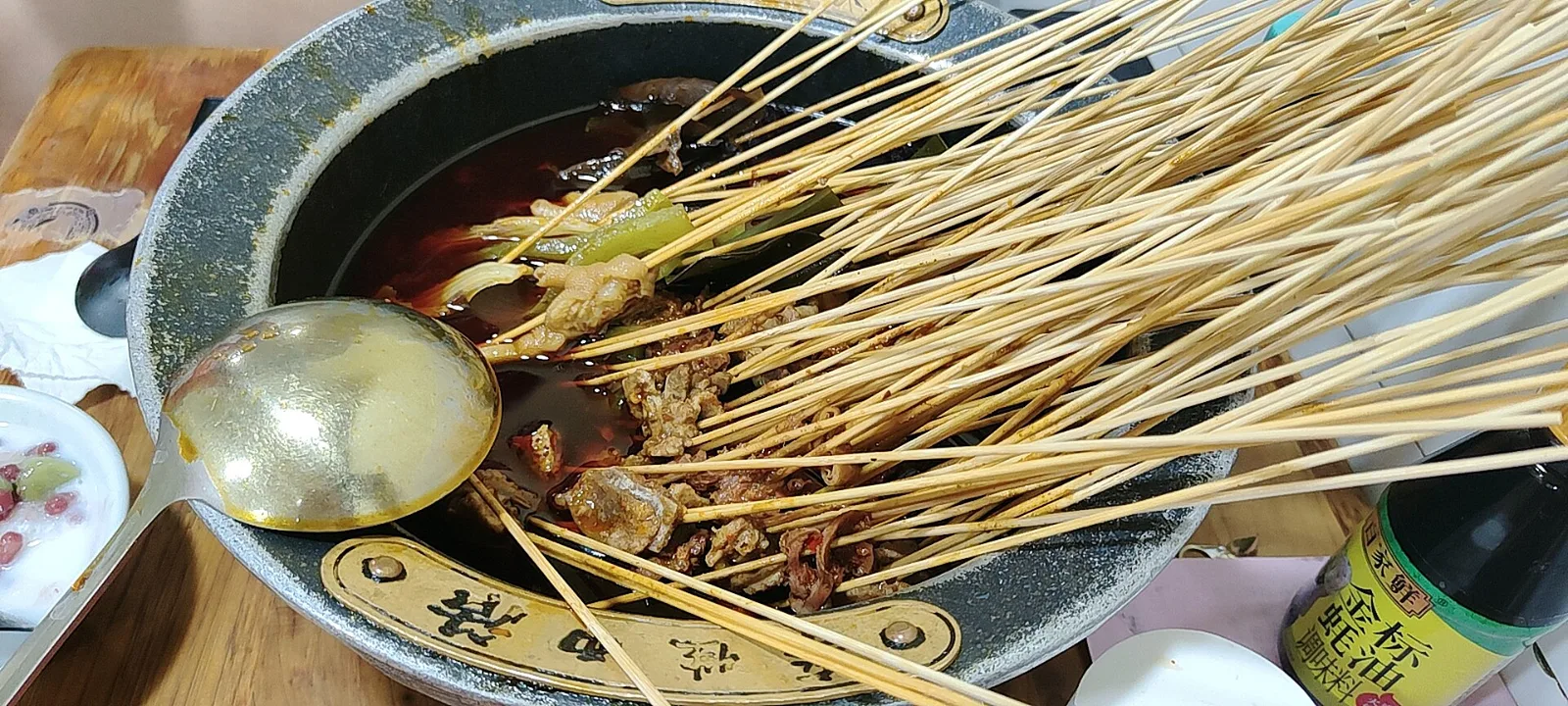
Despite the name, bobo chicken is not only chicken. The display usually includes chicken wings, feet, gizzards, liver, and skin, plus tofu skin, fish balls, quail eggs, lotus root, potato slices, and leafy vegetables. You pick what you want, the vendor counts the skewers, and the food is either dipped in broth or served with the broth poured over. The broth is the flavor: a red chili oil version or a pale sesame version.
The skewers are served cold, which is the defining feature and the main source of hesitation. Cold meat and cold tofu absorb the broth differently from hot pot, and the texture is firmer. Some shops warm the broth slightly, but the food itself stays cool. It is a snack, not a meal, and the pace is fast. Most people eat standing or on a low stool.
The name bobo is onomatopoeic, referring to the sound of skewers being dipped or tapped against the bowl. The dish is closely related to chuan chuan, but the experience is different: no cooking at the table, no shared boiling pot, and a much smaller commitment of time and money.
- Pick your own skewers from the display
- Chili oil or sesame broth
- Served cold or at room temperature
- Pay per stick
Pricing and portions
Most shops charge per skewer, with sticks costing roughly CNY 0.5–2 depending on the ingredient and the neighborhood. A satisfying plate of 20–30 skewers costs about CNY 30–60, and it is easy to spend more than you planned because the sticks are small. Some shops charge by weight instead. Ask before you fill your tray. Verify current prices, since street food pricing moves.
The cheapest skewers are vegetables and tofu; meat and offal cost more. If you are on a budget, choose a base of lotus root, potato, and tofu skin, then add a few meat skewers. The broth is usually included, but some shops charge separately for a dipping bowl. Check the sign or ask 'duō shǎo qián' before you commit.
Portions are easy to misjudge because the skewers are small. Ten skewers is a snack, twenty is a light meal, and thirty is a full one if you choose starchy ingredients. If you are sharing, agree on a budget before you start picking, or the bill can climb quickly.
Street snack culture and hygiene
Bobo chicken is sold from small shops, carts, and market stalls, often with no seating or a few plastic stools. The best stalls have high turnover and a visible queue. The food is less likely to have been sitting. Avoid displays where the skewers look dry, the broth is cloudy, or the vendor is handling money and food without gloves. Cold food at room temperature is a genuine hygiene concern, especially in summer.
If you have a sensitive stomach, choose a busy shop, eat earlier in the day, and skip the offal. The chili oil and sesame broth are both rich. A greasy, stale broth is a bad sign. Carry tissues and hand sanitizer, since many stalls do not provide them. Payment is often by QR code, so set up mobile payments before you go.
Street food in Chengdu is generally safe when turnover is high, but cold dishes carry more risk than freshly cooked ones. Use your judgment: if the stall looks clean, the staff are busy, and the ingredients are covered, you are probably fine. If something smells off, walk away. No snack is worth a ruined travel day.
Spice levels and what to try
The red broth is usually medium-to-hot, with chili oil, Sichuan pepper, sesame, and sometimes crushed peanuts. The sesame version is milder and nuttier, though it may still carry chili. Ask for 'shǎo là' or choose the sesame broth if you are heat-sensitive. The cold temperature mutes the burn slightly, but the oil lingers.
Good first picks are chicken wing, tofu skin, lotus root, potato, and quail egg. Offal such as gizzard and liver is chewy and minerally. Try one skewer before committing. The broth may contain peanuts, soy, and gluten, so ask if you have allergies. There is no vegetarian broth by default, and the skewers share the same bowl.
If you want to try the classic combination, choose a mix of textures: something chewy, something soft, something crunchy, and something starchy. Chicken feet are a local favorite but require some technique. Tofu skin and lotus root are easier entry points and absorb the broth well.
Where it fits in a day
Bobo chicken works best as an afternoon snack or a late-night stop, not as a main meal. It pairs naturally with chuan chuan or hotpot on a street food crawl, but eating all three in one night is a lot of oil. A cold beer or a cup of tea helps cut the richness.
If you want a more comfortable version, look for a modern shop with refrigerated displays and indoor seating. The flavor is close, and the hygiene is easier to trust. For a broader snack plan, see our five-day food itinerary.
Best for
- Budget travelers and street food fans
- Casual afternoon snacking
Honest notes
- The food is served cold, which is not to everyone's taste.
- Hygiene varies; avoid stalls where ingredients sit uncovered.
- Per-skewer pricing adds up quickly.
Not for
- Travelers with sensitive stomachs
- Anyone who dislikes cold meat or offal
Keep planning