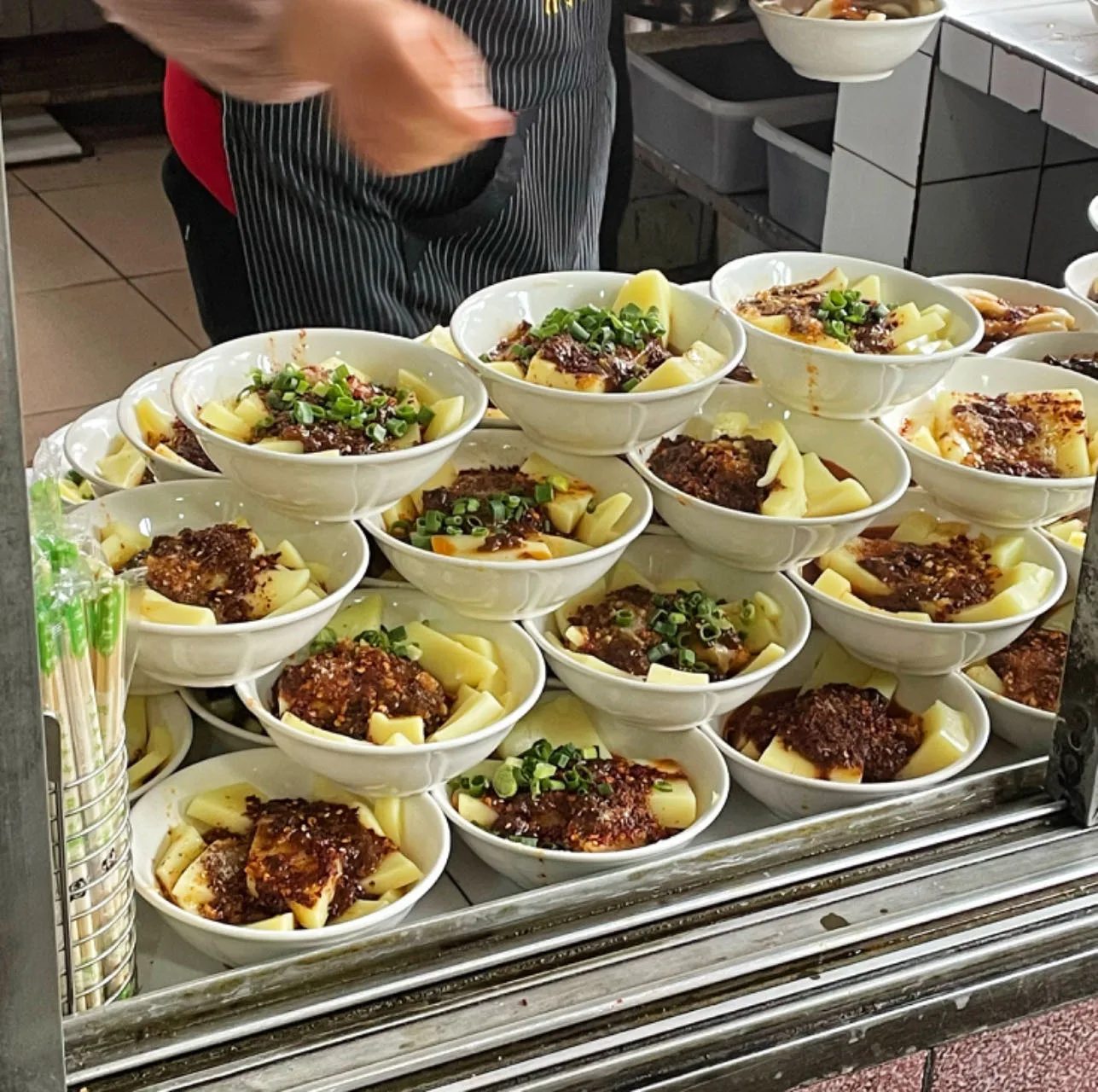
Sweet water noodles are a Chengdu snack that looks simple and tastes anything but. The noodles are thick, chewy, and served in a small bowl with a dark, sweetened soy sauce, red chili oil, garlic, and ground Sichuan pepper. You mix them at the table until every strand is coated. The portion is deliberately small, usually eight to ten bites, because the noodles are meant to be one stop on a snack crawl rather than a full meal. The name refers to the sauce, not to a sugary broth.
What makes the noodles different
The noodles are made from wheat flour and water, rolled thick and cut into long, square-ish strands. They are cooked until chewy, not soft, and served warm. The name refers to the sweetened soy sauce at the bottom of the bowl, sometimes called sweet water, not to a sugary broth. The sauce is thickened with sugar and soy until it clings, then combined with chili oil, garlic, sesame, and Sichuan pepper.
That combination gives the dish its character: sweet first, then salty and savory, then chili and a numbing finish. It is a balance that rewards mixing. If you eat from the top without stirring, you get plain noodles. The flavor is at the bottom. Some shops add crushed peanuts or sesame paste for richness, and a few add bean sprouts for crunch.
The noodles are thicker than dan dan noodles and have a firmer bite. They are not soup noodles, and they are not meant to be slurped in a broth. The sauce is sticky enough to coat the tongue, which is why the portion stays small. A full bowl of this would be too much.
- Thick wheat noodles
- Sweetened soy sauce
- Chili oil, garlic, and Sichuan pepper
- Small snack portion
How to eat it
Mix thoroughly as soon as the bowl arrives. Lift the noodles from the bottom, fold them through the sauce, and keep going until the color is even. The sauce is sticky, so a spoon helps catch the last bits. Add a splash of black vinegar if you want more acidity, but taste first. The sweet-sour balance is already deliberate.
The noodles are served at a warm room temperature rather than piping hot, and they tighten as they cool. Eat them promptly. A small bowl costs roughly CNY 8–15, and the portion is small enough that ordering two snacks in one sitting is normal. Verify current prices, since snack shop pricing changes often.
If the sauce is too sweet for you, ask for a little more vinegar or chili oil. Most shops will adjust. If you want less heat, ask for 'shǎo là'. The garlic is raw, so the finish is sharp; a cup of tea or a cold drink helps. Do not expect a spoonful of broth at the bottom, because there is none.
Where it fits in a snack crawl
Sweet water noodles are a classic second or third stop on a Chengdu snack crawl. Start with something savory and mild, such as long chao shou wontons, then move to sweet water noodles, then finish with something cold or fried. The small portion makes this possible. If you eat a full bowl as a meal, you will probably still be hungry.
Snack streets and older neighborhoods are the best setting. Look for a shop with a short menu and a steady local queue, often near markets or schools. Tourist areas sell the same dish for more, sometimes with a thicker, sweeter sauce. The Chunxi Road area is convenient but not the best value. Our Chunxi Road guide explains what else is nearby.
Pair the noodles with a cold vegetable dish or a bowl of dan dan noodles if you want a fuller lunch. Both are small, both are cheap, and together they show two very different sides of Sichuan noodle cooking. A tea house afterward is a better rest stop than a dessert shop. In the evening, the same shops often sell out, so go earlier in the day.
Cost, portion and dietary notes
Sweet water noodles contain wheat, soy, sesame, and garlic. They are not gluten-free, and there is no meaningful low-sodium version because the sauce is built on soy. Some shops add crushed peanuts, so ask if you have a peanut allergy. Vegetarian versions are usually fine, but confirm that the soy sauce is not mixed with meat stock, which is uncommon but possible.
The dish is mild-to-medium in heat. The chili oil is aromatic rather than brutal, and the sweet sauce softens it. If you want less heat, ask for 'shǎo là'. If you want none, ask for 'bù là', though the bowl will lose its point. The garlic is raw and strong, so it is not a good choice before a meeting or a long train ride.
Because the portion is small, it is a poor choice for a hungry traveler expecting a full meal. It is also not a soup noodle; do not expect broth. Treat it as a snack, order a side, and keep moving. If you are eating with children, ask for the chili oil on the side so they can try the noodles plain.
Best for
- Snack crawls and light lunches
- Visitors who like chewy noodles and sweet-savory flavors
Honest notes
- The sweet-savory sauce is not to everyone's taste.
- The portion is small for the price.
- Not suitable for gluten-free diets.
Not for
- People with celiac disease
- Anyone expecting a large bowl of soup noodles
Keep planning