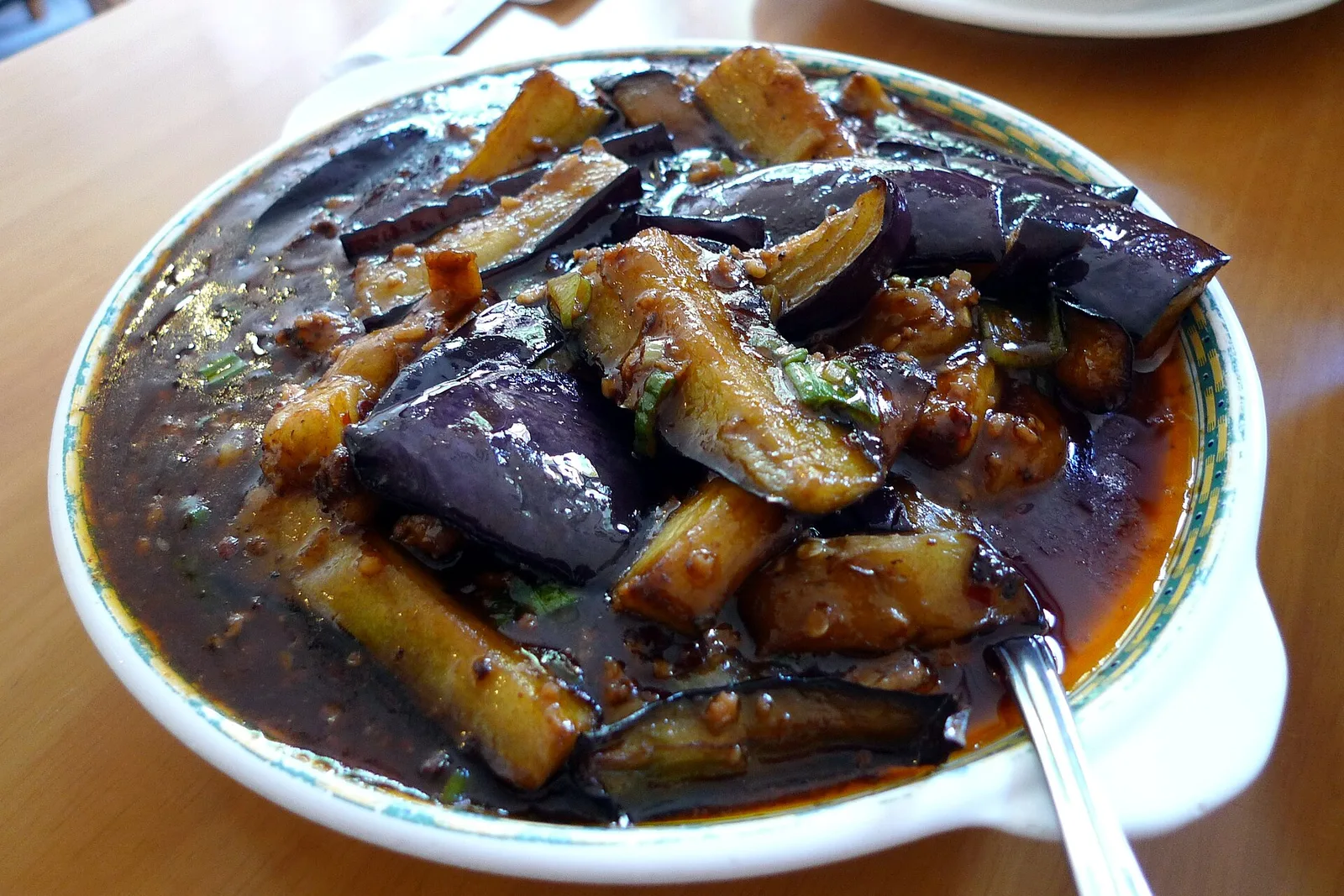
Yuxiang eggplant is the vegetable dish that convinces skeptical visitors that Sichuan food is about more than heat. The eggplant is soft and glossy, coated in a sauce that balances garlic, ginger, pickled chili, sugar, and black vinegar. The flavor is often described as fish-fragrant, but the dish contains no fish. Yuxiang is a cooking style, not an ingredient, and it is one of the most reliable orders for a mixed table. It is also a dish where the kitchen's shortcuts show, because the sauce has nowhere to hide.
Why there is no fish in it
Yuxiang (fish-fragrant) is one of Sichuan cuisine's classic flavor profiles. It was developed for cooking fish, using the same aromatics that mask river mud and enrich the meat: pickled red chilies, garlic, ginger, scallion, sugar, and vinegar. The combination became a sauce in its own right, and cooks applied it to pork, beef, tofu, and eggplant. The name describes the flavor, not the contents.
In Chengdu restaurants, the sauce usually includes pickled erjingtiao chilies, doubanjiang, garlic, ginger, sugar, black vinegar, and soy. Some versions add minced pork, which is traditional for yuxiang pork but less common for eggplant. If you are vegetarian, this is the detail to check, not the fish. The dish may also contain oyster sauce in some kitchens, another hidden animal product.
The flavor profile is sometimes called fish-fragrant because it was originally used on fish, but the name has drifted. Modern diners should read it as garlic, ginger, pickled chili, sweet, and sour. Once you know that, the menu becomes easier to navigate, and you can apply the same expectation to yuxiang pork, yuxiang tofu, or yuxiang shredded pork.
- No fish, despite the name
- Pickled chili, garlic, and ginger
- Sugar and black vinegar balance
- Sometimes contains minced pork
What the sauce tastes like
The first impression is sweet and sour, followed by garlic and a slow chili warmth. Good yuxiang sauce is glossy but not gluey, and the eggplant should hold its shape rather than collapse into paste. The vinegar should be present enough to cut the oil. If the sauce tastes like sweet-and-sour takeout, the kitchen is holding back on garlic and pickled chili.
Eggplant absorbs oil, so many restaurants deep-fry it before braising to keep the flesh creamy and the skin intact. That step makes the dish heavier than it looks. A home-style version often skips the deep fry, steams or pan-fries the eggplant, and ends up softer and less rich. Both are legitimate. The restaurant version is usually glossier and more intense, while the home version is easier to eat in quantity.
The sauce is thick enough to coat rice, which is how most locals eat it. Do not treat it as a light vegetable side; it is a rich dish that happens to be made of eggplant. If the rest of the table is fried or oily, order something plain and steamed to balance it.
Vegetarian, with a caveat
Yuxiang eggplant is one of the easiest vegetable dishes to order in Chengdu, but vegetarian travelers should not assume it is meat-free. Some kitchens add minced pork, and many use chicken or pork stock as the braising liquid. Say 'sù de' (vegetarian), 'bù yào ròu mò' (no minced meat), and confirm that the stock is not meat-based. Our language guide has phrases for these questions, and showing them on your phone helps.
Soy sauce and doubanjiang both contain wheat, so the dish is not gluten-free. It is also garlic-heavy, which matters if you avoid allium. The pickled chilies and bean paste are salty, so pair the dish with plain rice rather than another salty order. If you are vegan, confirm that no egg or oyster sauce is used in the sauce.
A dedicated vegetarian restaurant is the safest bet, but many ordinary kitchens can make the dish without meat if you ask early and clearly. Do not assume a menu label; Chinese menus rarely mark vegetarian dishes. Pointing at the dish and saying 'sù de' is usually enough, and it is worth the extra minute.
Home-style versus restaurant versions
A home-style yuxiang eggplant tends to be softer, less oily, and more sour, with visible pieces of garlic and chili. A restaurant version is often deep-fried first, glossy with oil, and sweeter. Banquet kitchens may peel the eggplant and cut it into neat batons. Small shops leave the skin on and cut rougher pieces. Neither is more authentic, but the restaurant version is harder to eat in quantity.
Prices range from about CNY 20–35 at a neighborhood restaurant to CNY 35–55 at a mid-range or tourist-facing place. Verify current prices before ordering. As a shared dish it serves two to three people alongside rice and another dish. It is a good partner for mapo tofu or kung pao chicken, because the sweet-sour sauce contrasts with the numbing and savory flavors.
Order it as part of a shared meal rather than as a solo main. Say 'yú xiāng qié zi' and, if you want less heat, 'shǎo là'. Ask for 'bù yào tài yóu' (not too oily) if the kitchen is willing. The dish is best eaten with steamed rice, which soaks up the sauce and balances the sweetness. For a broader plan, see our five-day food itinerary.
Best for
- Vegetable-focused shared meals
- Visitors who want a mild Sichuan option
Honest notes
- Many versions are deep-fried first and quite oily.
- Some kitchens add minced pork or use meat stock.
- The sauce can be sweeter than expected.
Not for
- Anyone avoiding garlic or gluten
- Diners who dislike sweet-sour sauces
Keep planning