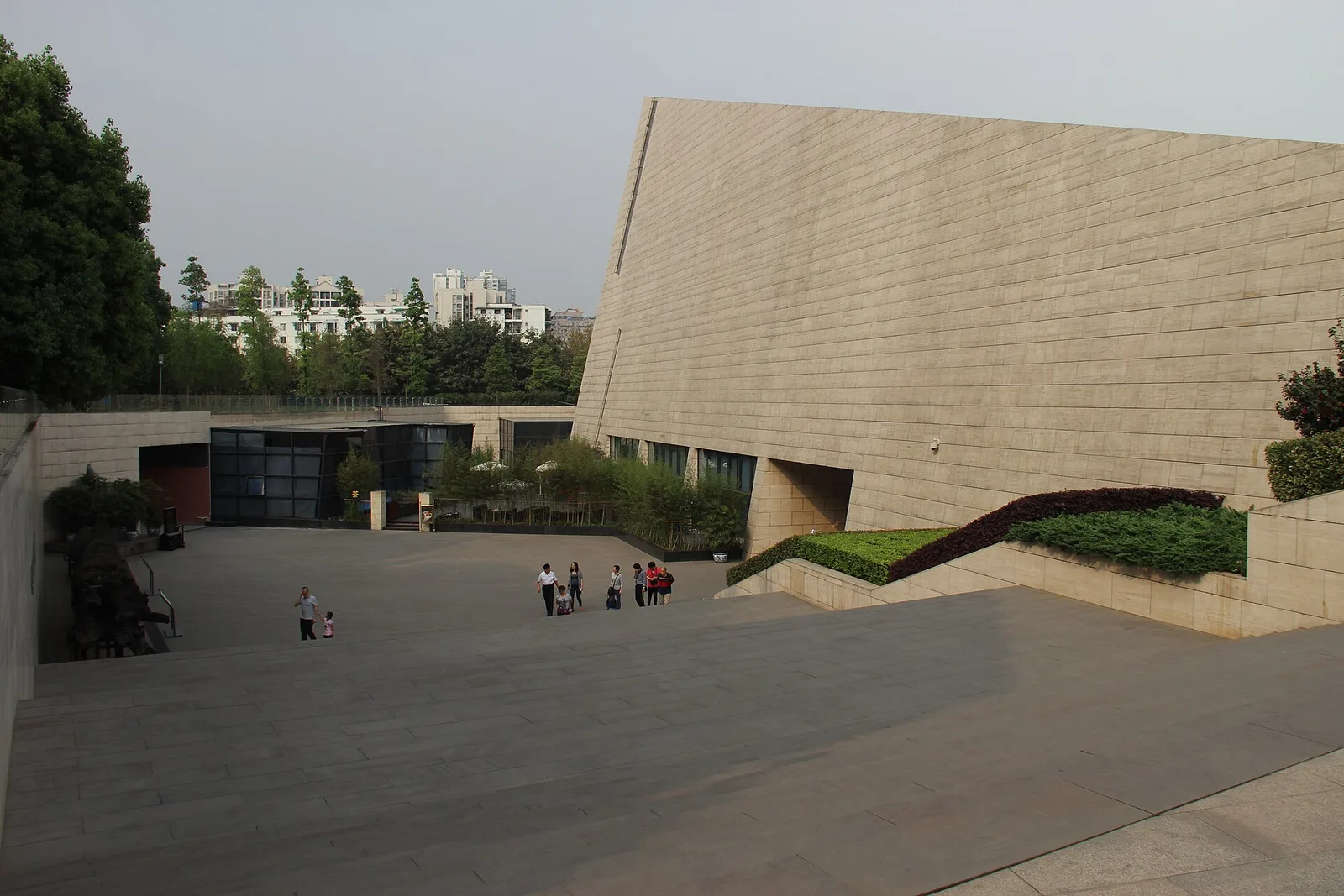
Jinsha Site Museum preserves a Shu kingdom settlement and ritual site discovered in 2001 during a construction project in western Chengdu. The finds date to roughly 3,000 years ago, in the late Shang and Western Zhou periods, and include gold, jade, bronze, ivory, and lacquer. The gold Sun Bird disc is the signature object and the reason many visitors come. The museum also keeps a hall over the original excavation pits. One practical warning comes first: the museum announced a full closure from December 5, 2025 to April 30, 2027 for a major upgrade, with reopening expected around May 1, 2027. Check the official site before you build a day around it.
What was found at Jinsha
Jinsha was a settlement and ritual site of the ancient Shu people, who lived on the Chengdu plain before the state of Qin absorbed the region. Archaeologists uncovered a large sacrificial area with pits containing elephant tusks, jade, bronze, gold, and stone objects. The site is dated to roughly 1200 to 650 BC, and it is usually understood as a later center of the same culture that produced Sanxingdui.
The Sun Bird disc is a small, thin gold ornament with four birds circling a sun. It weighs about 20 grams, and it was adopted as the emblem of China's cultural heritage in 2005. It is easy to walk past because of its size; look for the case with the circular gold object and give it a moment. The collection also includes a gold mask, jade cong and zhang, and a large number of elephant tusks, which are remarkable given how poorly ivory usually survives.
- The gold Sun Bird disc
- Jade and bronze ritual objects
- Elephant tusks and lacquerware
- An excavation hall over the original pits
The two halls and a sensible route
The museum normally has two main buildings. The Relics Hall covers the excavation area, with walkways above the pits and displays that show where objects were found. The Exhibition Hall holds the artifact galleries, including the gold, jade, bronze, and ivory collections. Start with the Relics Hall for context, then move to the Exhibition Hall; the reverse order makes the pits feel like an afterthought.
Allow two to three hours. The site is compact and mostly indoors, which makes it one of the better wet-weather stops in the city. English labels are present in the main galleries, but the deeper excavation story is easier to follow with the audio guide or a short read beforehand. The Sanxingdui guide explains the neighboring culture and makes the Jinsha material easier to place.
- Relics Hall for the excavation pits
- Exhibition Hall for gold and jade
- Allow 2–3 hours
- Mostly indoors, so rain is less of a problem
Tickets, transport and timing
When open, the museum runs from morning to early evening, usually 9 a.m. to 6 p.m. with last entry at 5 p.m. It generally closes on Mondays, though the schedule varies in January, February, July, and August and around public holidays. Tickets are about CNY 70 for adults, with discounts for students and free entry for young children and older visitors; verify the current price and booking method on the official channel. Bring the passport used for the reservation.
Metro Line 7 stops at Jinsha Museum, and Exit C puts you roughly 200 meters from the south gate. From central Chengdu the ride takes about 20 minutes plus walking. A DiDi is also simple and takes 20 to 30 minutes depending on traffic. The museum sits in Qingyang District, west of the center, and pairs naturally with the Du Fu Thatched Cottage and the Sichuan Museum for a west-side day.
Weekday mornings are the quietest. School groups arrive mid-morning, and weekends are busier. If you are visiting around the closure period, confirm the status rather than trusting old opening hours on travel sites.
Jinsha, Sanxingdui and the closure
Jinsha and Sanxingdui are often mentioned together because they belong to the same broad Shu cultural world. Sanxingdui, about an hour north of Chengdu in Guanghan, has the larger bronze masks and the sacred tree. Jinsha is in the city, has the Sun Bird disc and the excavation hall, and is easier to fit into a short trip. If you have time for only one, choose based on whether you want spectacular bronzes or a city museum with an in-place archaeological site.
The current closure is the main practical issue. The museum shut on December 5, 2025 for its first comprehensive upgrade since opening in 2007, and it is scheduled to reopen around May 1, 2027. During the closure, some Jinsha objects are displayed in other museums, including the Sichuan Museum and Sanxingdui, according to the museum's notice. The official site also offers a digital exhibition. If your trip falls in the closure window, see the 3-day itinerary for city alternatives and put Jinsha on a future trip.
For anyone visiting after reopening, the museum is an easy half-day and a strong rainy-day option. It is less spectacular than Sanxingdui at first glance, but the combination of original pits and small, finely made objects rewards a slower visit.
Best for
- Travelers interested in archaeology and the Shu kingdom
- Rainy-day planners who want an indoor museum
Honest notes
- The museum is closed for a major upgrade from December 5, 2025 to April 30, 2027, so it cannot be visited during that period.
- The famous gold disc is small; the visit is about context as much as star objects.
- Without an audio guide or background reading, some galleries can feel repetitive.
- The museum is less spectacular than Sanxingdui if you want large bronzes.
Not for
- Travelers visiting during the 2025–2027 closure
- Anyone expecting a quick photo stop with large treasures
Keep planning