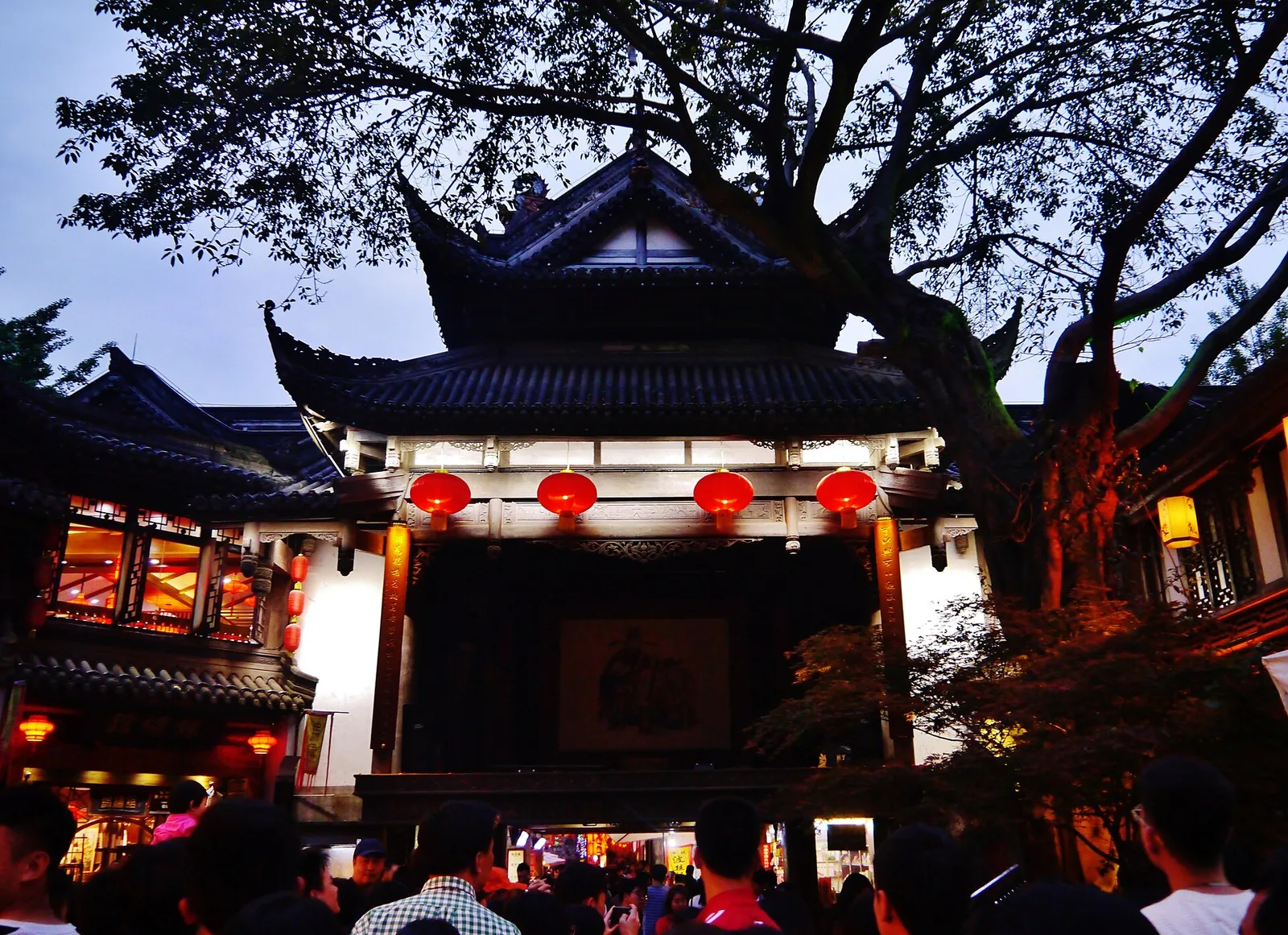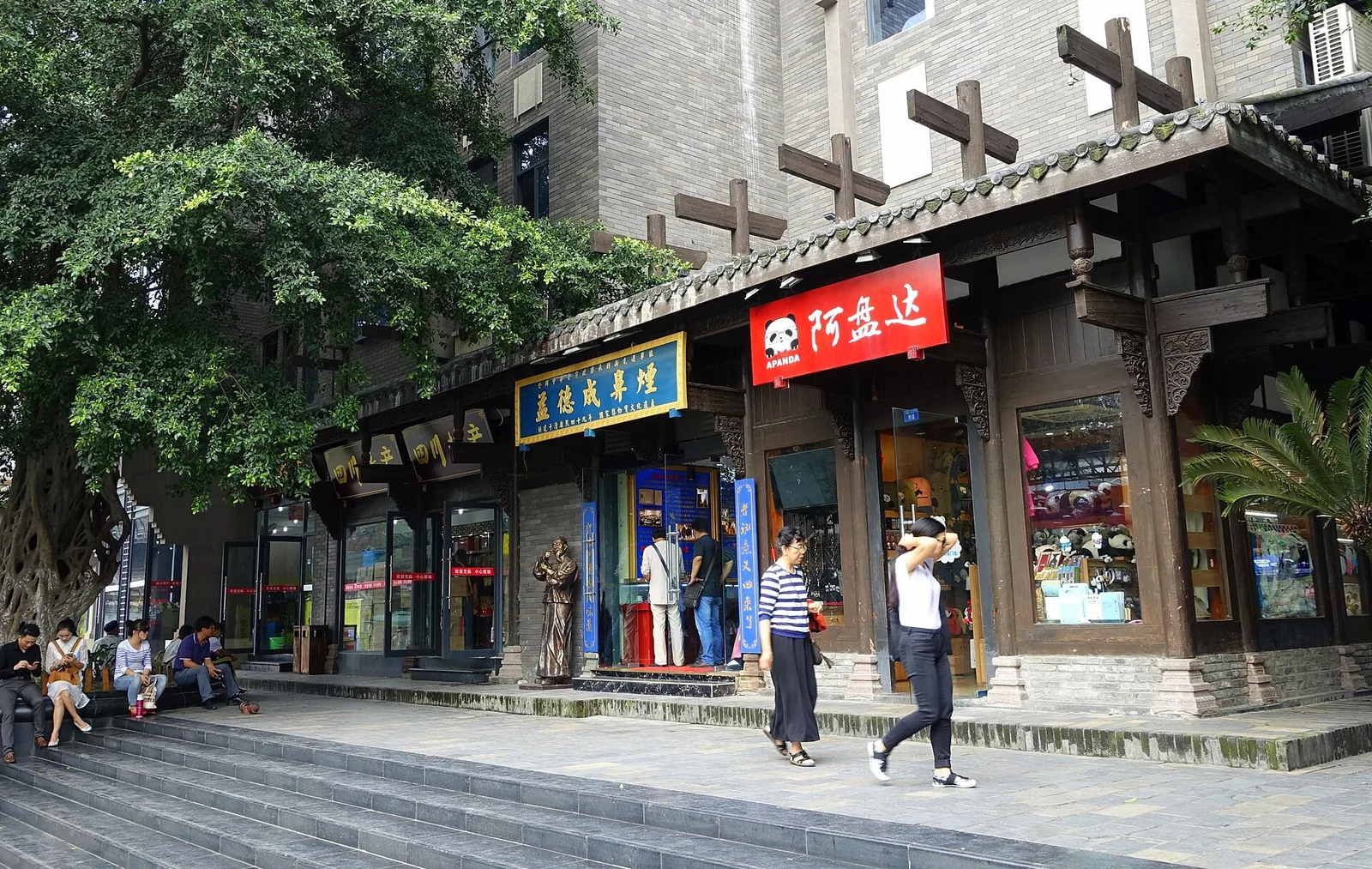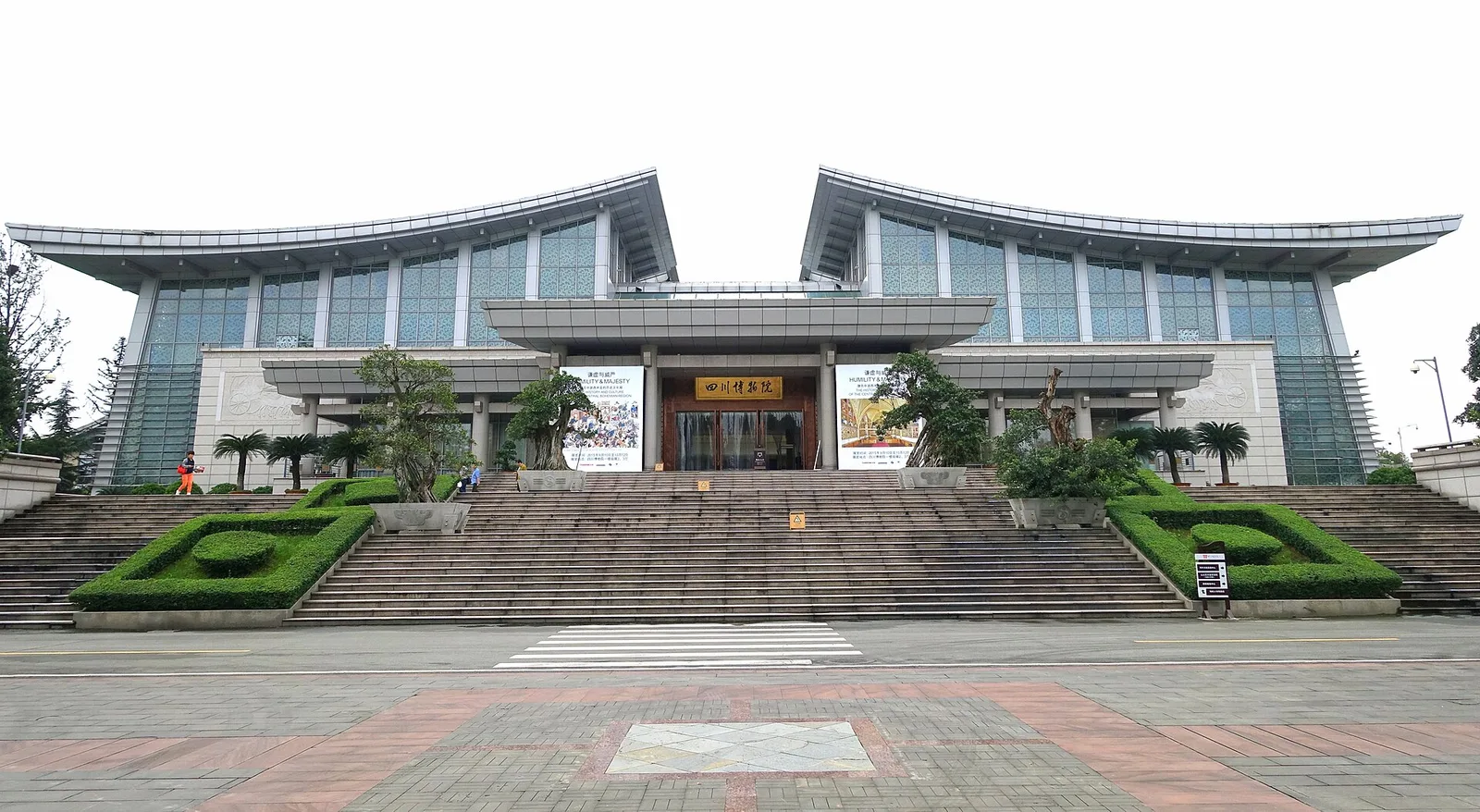
Sichuan Museum is the province's largest comprehensive museum and one of the biggest in southwest China. It sits on Huanhuaxi Road beside Huanhuaxi Park, a short walk from Du Fu Thatched Cottage, and it is free to enter with a reservation. The collection runs from bronze and Han dynasty brick reliefs to Tibetan Buddhist sculpture, ethnic minority textiles, and modern Chinese painting. It is not a headline attraction in the way the pandas or Sanxingdui are, but it is a good, calm half-day and one of the best wet-weather stops in Chengdu.
What the collection covers
The museum is organized around permanent galleries rather than a single blockbuster. The bronze gallery covers ritual vessels and weapons from the Shu region. The Han dynasty gallery displays pictorial bricks and stone reliefs that show daily life, music, and transport from about 2,000 years ago. A large Tibetan Buddhist gallery holds sculpture, thangka, and ritual objects, and the ethnic galleries cover the material culture of groups including the Yi, Tibetan, Qiang, and Miao.
The painting and calligraphy galleries include a substantial Zhang Daqian collection, donated by the artist's family. Temporary exhibitions change through the year and sometimes carry a separate ticket. Check the museum's WeChat account for what is on during your visit, because a good temporary show can change the shape of a two-hour stop.
- Bronze and Han dynasty galleries
- Tibetan Buddhist art
- Ethnic textiles and silverwork
- Zhang Daqian painting collection
A realistic route
Two to three hours is enough for a focused visit. Pick two or three galleries rather than trying to see everything. The Han brick reliefs and the Tibetan gallery are the most distinctive sections for a first visit, and the bronze gallery gives context for the wider Sichuan story. If you have just come from Sanxingdui or plan to visit Jinsha, the bronze cases will feel more meaningful.
The building is large and the English signage is uneven. Gallery names are translated, but object labels vary in detail. A free audio guide is not always available; ask at the desk. The museum is quiet on weekday mornings and busier on weekends, when families and school groups arrive. Photography is allowed in most permanent galleries but not in special exhibitions; check the signs at each entrance.
- Choose two or three galleries
- Start with the Han reliefs and Tibetan art
- Weekday mornings are quietest
Free tickets, hours and transport
Admission is free, but you need a reservation through the official WeChat account or website, and foreigners register with a passport number. Slots can fill on weekends and holidays, so book a day or two ahead. The museum is normally open Tuesday to Sunday from 9 a.m. to 5 p.m., with last entry around 4 p.m., and closed on Mondays except public holidays. Security checks bags at the entrance, and there are free lockers.
The nearest reliable metro option is Line 5 to Qingyang Palace, followed by a 10-minute walk. Newer stations have shortened the walk from some directions, so check a current map app. A DiDi from central Chengdu takes 15 to 25 minutes. The museum is on Huanhuaxi Road, next to Huanhuaxi Park and roughly 15 minutes on foot from Du Fu Thatched Cottage.
Combine the museum with the cottage and Huanhuaxi Park for a west-side day, or use it as the indoor anchor when rain disrupts an outdoor plan. Food inside is limited to a simple cafe; eat before or after. The Qingyang Palace is a 15-minute walk north and makes a natural second stop if you want tea and a working temple.
Who it suits, and the trade-offs
This is a good museum for travelers who want depth without a blockbuster crowd. It suits history-minded visitors, families with older children, and anyone who needs a dry, calm afternoon. The range is broad, so it is easy to find something that holds attention even if one gallery does not.
The trade-off is that the collection is spread across many rooms and lacks a single must-see object. If you have one museum day and want bronze masks and gold, go to Sanxingdui or Jinsha instead. If you want to understand Sichuan across several periods and cultures, the Sichuan Museum is the better overview. Check the best time to visit page if you are deciding between a museum day and a day trip.
Allow extra time if a temporary exhibition interests you, and do not save the museum for the final hour before closing; staff begin clearing galleries before 5 p.m.
The museum cafe is a basic stop for coffee and simple snacks, not a destination lunch. For a proper meal, walk toward Qinghua Road or the Huanhuaxi area for noodle shops and small Sichuan restaurants, or eat before you arrive. The museum is also a comfortable place to wait out a heavy afternoon storm; the galleries are quiet, the air conditioning works, and there is no pressure to move quickly.
Best for
- Travelers who want a broad, calm museum visit
- Rainy days and west-side itineraries
Honest notes
- The collection is broad but has no single blockbuster object.
- English labels are inconsistent outside the main galleries.
- Some temporary exhibitions may carry a separate ticket.
- The nearest metro still leaves a 10-minute walk.
Not for
- Travelers seeking one spectacular treasure
- Anyone with only one museum slot and a preference for bronze-age drama
Keep planning