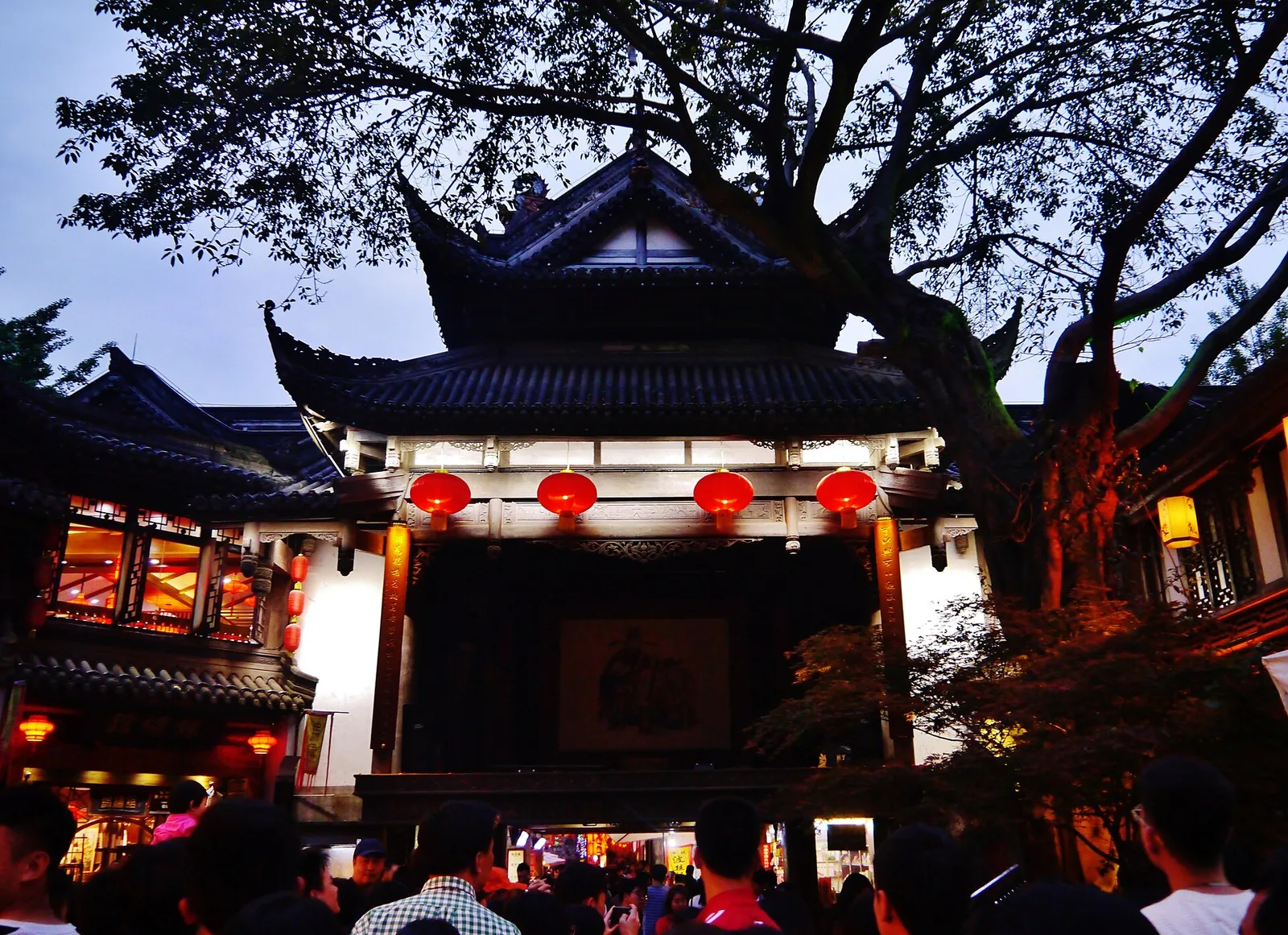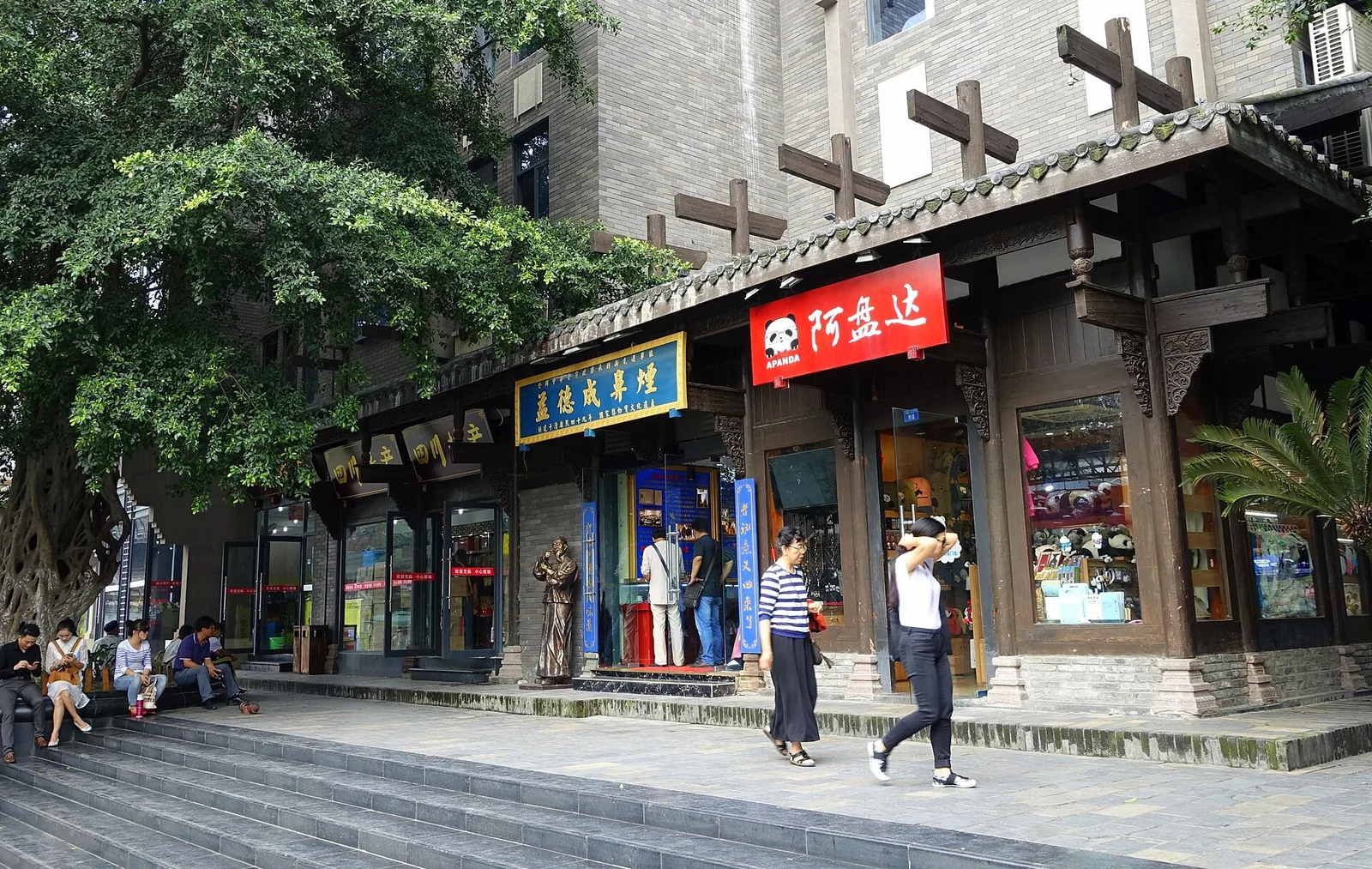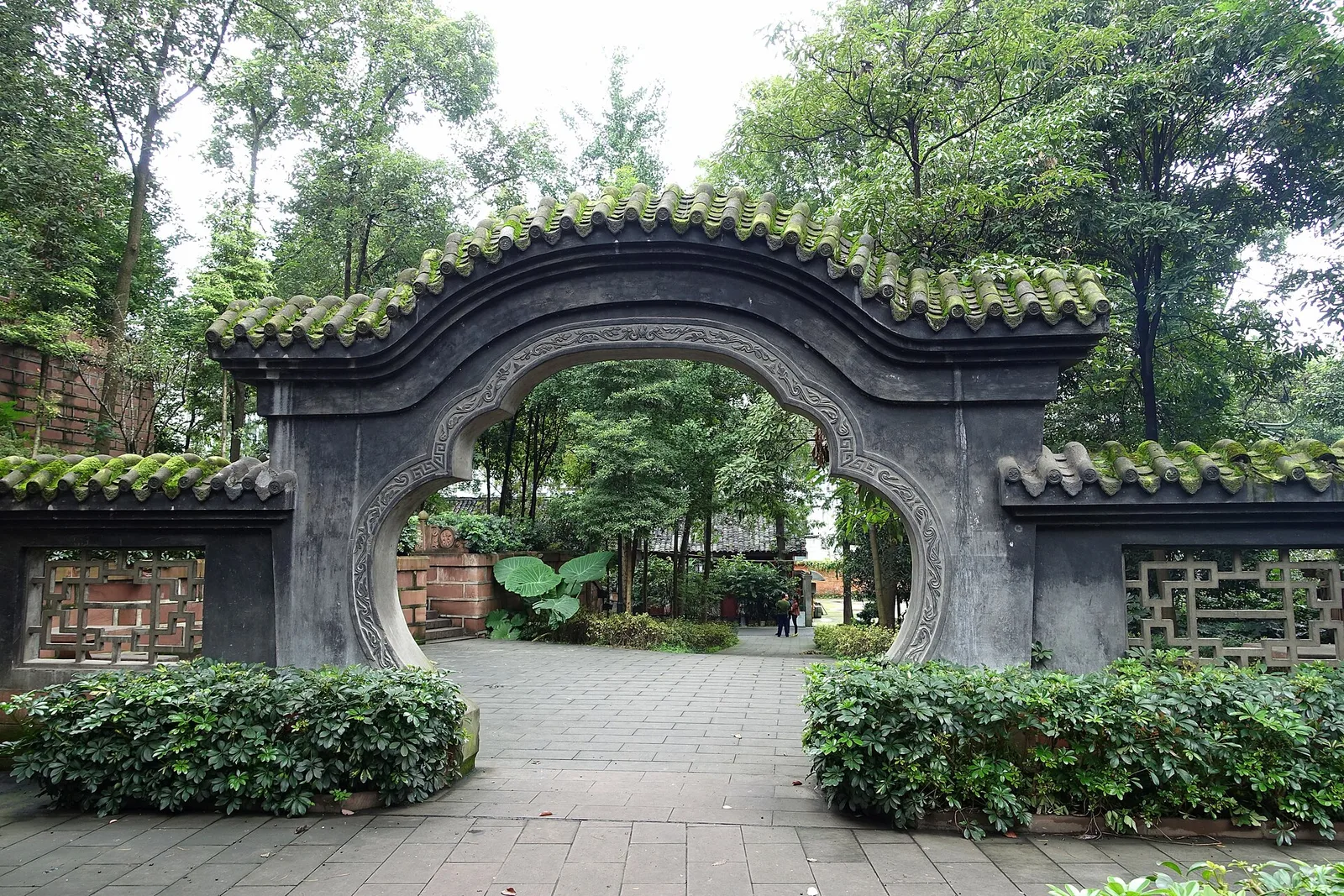
Qingyang Palace is a working Taoist temple in western Chengdu and the largest Taoist complex in southwest China. It is not a museum or a restored set piece. Incense burns, priests move between halls, and locals come to pray, drink tea, and sit in the courtyards. The temple is small enough for a 45-minute visit and interesting enough for a slow morning with tea. It pairs well with the Sichuan Museum and the Culture Park nearby.
A working temple, not a museum
The site's history reaches back to the Tang dynasty, though the buildings you see today are mostly later reconstructions, with the current layout shaped in the Qing period. The main route passes through courtyards and halls dedicated to Laozi and other Taoist figures. The atmosphere is lived-in: incense smoke, faded paint in places, and worshippers who are there for reasons that have nothing to do with tourism.
That is the appeal, and it is also the reason to adjust your behavior. Keep your voice low, do not block worshippers, and ask before photographing people or ceremonies. Dress modestly, cover shoulders, and avoid flash inside halls. The temple etiquette guide covers the basics for Buddhist and Taoist sites in Chengdu.
- Working Taoist temple
- Courtyards and incense
- Modest dress and quiet voices
- Small admission fee
The bronze goat and the main halls
The best-known object is the bronze goat, a single-horned figure said to combine features of the twelve zodiac animals. Visitors line up to rub it for luck and health, which has polished parts of the bronze to a shine. There are two goat figures in the hall; the composite one is the famous one. A light touch is enough, and staff will stop anyone who climbs or handles it roughly.
The Sanqing Hall is the main sanctuary, and the Bagua Pavilion and the surrounding halls hold statues, inscriptions, and stone tablets. The temple is not rich in English explanation, so the visit is more atmospheric than educational. Read a short introduction to Taoism beforehand if you want the halls to mean more than a sequence of incense burners.
The temple also has a small garden and a reputation for calligraphy and stone inscriptions. Allow 45 to 90 minutes for the halls, or longer if you stop for tea.
Look up in the main halls for the roof details and painted beams, which are easy to miss when the courtyard is busy. The temple is compact, so a slow loop through the side courtyards takes only a few minutes more and usually brings quieter corners. If a hall is closed for a ceremony, accept it and move on rather than waiting at the door. The stone tablets and inscriptions are not translated, but they give the complex a sense of continuity that the rebuilt halls alone do not.
Tea, festival days and timing
The on-site teahouse is one of the reasons locals come. Covered-bowl tea typically costs CNY 15 to 30, and the pace is slow. It is a cheaper and calmer tea stop than the famous Heming Teahouse at People's Park, though it has less of the park's theater. The vegetarian canteen nearby serves simple noodles and snacks at low prices.
Weekday mornings are the calmest time to visit. Weekends bring more local families, and the Lunar New Year period is the busiest by far, with a temple fair atmosphere, crowds, and heavy incense. Major Taoist festival days also draw worshippers. If you want the festival experience, go early and accept the noise; if you want a quiet visit, check the lunar calendar and avoid the first two weeks of the new year.
The temple is normally open from around 8 a.m. to 5:30 or 6 p.m., with seasonal variation. Last entry is usually 30 minutes before closing. Verify hours and the small ticket price before you go; the fee is about CNY 10 and includes three incense sticks.
Getting there and nearby stops
Metro Line 5 has a Qingyang Palace station, and the exits put you two or three minutes from the gate. That makes it one of the easiest temples in Chengdu to reach without a taxi. The temple sits on West First Ring Road, next to Culture Park and the Songxianqiao market area.
The Sichuan Museum is about 15 minutes on foot, which makes a sensible pairing: museum first, temple and tea after. Du Fu Thatched Cottage is a longer walk or a short taxi ride west. If you are building a central-city day, the temple also works as a quiet stop between People's Park and the museum district.
Food around the temple is ordinary and cheap rather than destination dining. The market area has snacks, and the streets toward Culture Park have noodle and rice shops. This is a good place to spend a low-cost hour rather than a place to plan a meal around.
Best for
- Travelers interested in living religious sites
- Anyone wanting a cheap teahouse stop away from the crowds
Honest notes
- The buildings are largely later reconstructions, not Tang originals.
- English explanations are limited, so the visit is atmospheric rather than educational.
- Lunar New Year and festival days are extremely busy.
- The bronze goat is rubbed constantly and is more of a tradition than a pristine artifact.
Not for
- Visitors expecting a polished museum-style experience
- Travelers who dislike incense smoke or religious settings
Keep planning