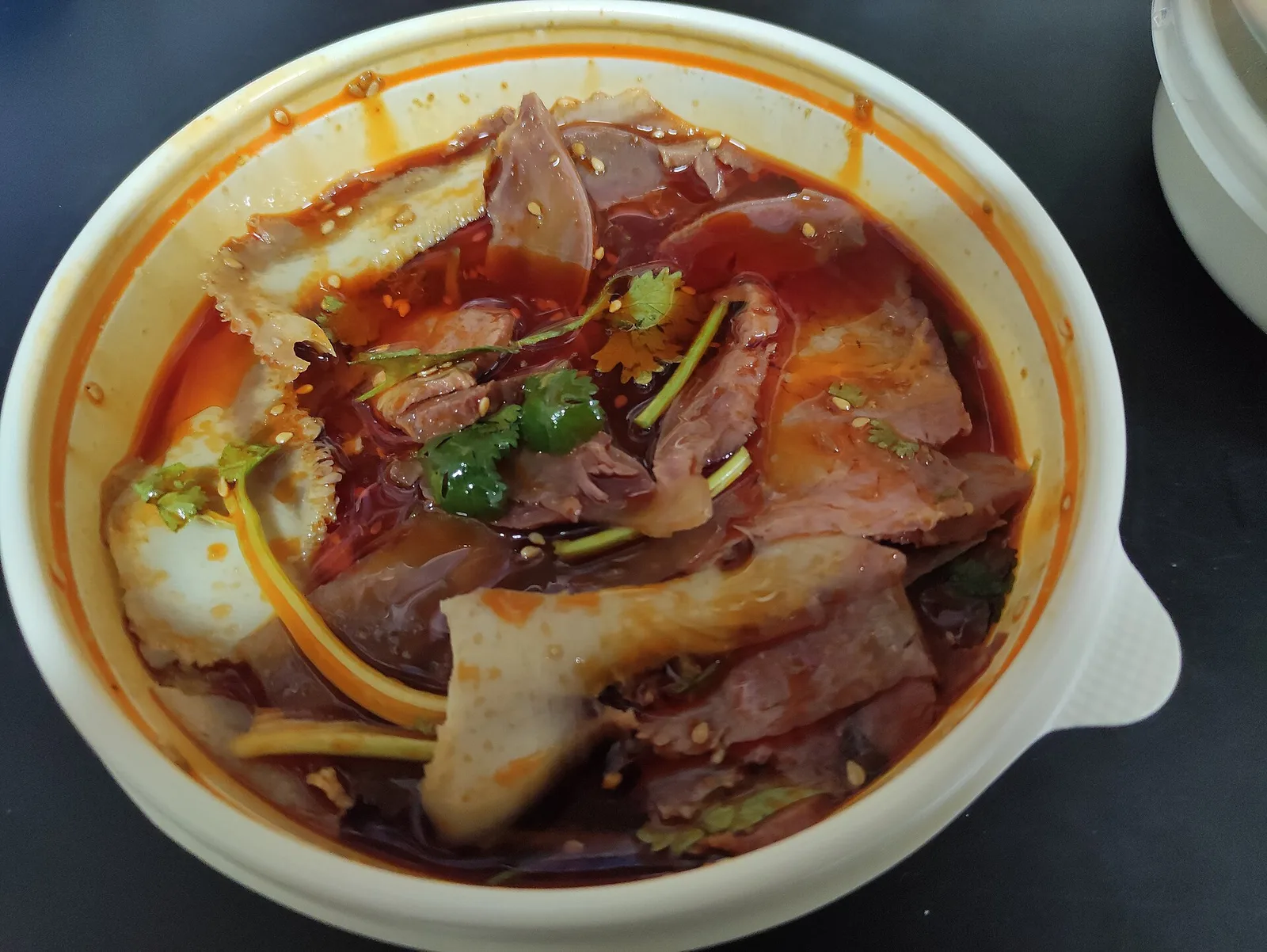
Fuqi feipian is Chengdu's most famous cold appetizer: a plate of thin-sliced beef and offal, glossy with red chili oil and scattered with crushed peanuts, sesame, and cilantro. It arrives at room temperature, often before the hot dishes, and it is one of the clearest expressions of Sichuan flavor: savory, numbing, aromatic, and rich with chili. The name translates as husband and wife lung slices, which confuses almost everyone. There is no lung in a modern version, and the story behind the name is more interesting than the ingredients suggest. It is also a dish that rewards a little ordering knowledge, because the offal and the heat are not for everyone.
What is actually in the dish
A typical plate contains thinly sliced beef shank, beef tripe, and sometimes beef tongue, heart, or liver. The meat is braised until tender, chilled, then sliced and dressed to order. The sauce is the point: red chili oil, ground Sichuan pepper, crushed peanuts, sesame seeds, soy sauce, a little sugar, and plenty of cilantro and scallion. Some kitchens add a spoon of braising liquid to loosen the dressing, and a few add celery or cucumber for crunch.
Because the dish is served cold, texture matters as much as heat. Good beef shank slices are firm but tender, with a little gelatinous bite. Tripe should be springy, not rubbery, and the peanuts should still taste fresh. If a plate tastes only of chili oil and salt, the kitchen is hiding mediocre meat. On a shared table, fuqi feipian works as a cold counterpoint to hot stir-fries, and it pairs well with plain rice.
The dish is rich, so portions are smaller than they look. A small plate is enough for two people to taste, not to fill up. If you are ordering several dishes, one cold plate is usually enough. If the table is large, order the bigger size and share it.
- Beef shank and tripe are the core ingredients
- Chili oil, Sichuan pepper, peanuts, and sesame
- Served cold or at room temperature
- Usually a shared appetizer, not a main
The name story
The name fuqi feipian means husband and wife lung slices. The usual story credits a Chengdu couple, Guo Chaohua and Zhang Tianzheng, who sold cheap sliced beef offal from a street stall in the 1930s. They used cuts that others discarded, including lung, and the dish became known by the couple's relationship rather than by its ingredients. Over time the lung disappeared from most recipes, but the name stayed.
You will see the story printed on menus and repeated by guides with small variations, and it is worth treating as folklore rather than verified history. What is consistent is the idea: a frugal street food made from offal became a classic through a strong sauce. The story also explains why the dish is sometimes called couple's delight in English, a translation that sounds more romantic than the plate deserves.
The name is a useful reminder that Sichuan food has a long history of turning inexpensive parts into memorable dishes. If you are squeamish about offal, the story will not make the tripe easier to eat, but it does explain why the dish exists and why locals order it with such affection.
How to order it mild
Fuqi feipian is not a beginner's dish, but it is adjustable. Ask for 'wēi là' (mild) or 'shǎo là' (less spicy), and ask for the chili oil on the side with 'zuò liào fēn kāi'. You can then add sauce gradually. The numbing effect comes from ground Sichuan pepper, which is separate from the chili heat. If you dislike the tingle, ask them to hold it, though the dish will taste flatter.
Ordering a cold dish at a busy restaurant is usually safe because it is dressed to order, not ladled from a long-standing pot. Still, if the meat looks dry or the oil smells stale, send it back. Peanuts are a standard garnish, so a peanut allergy is a serious problem here. Ask clearly and expect cross-contact risk in a busy kitchen. The dish also contains soy sauce, so it is not gluten-free.
If you want to try the flavor without committing to offal, some restaurants offer a beef-only version. Ask for 'niú ròu de' and accept that it is a variation, not the classic. A few phrases go a long way; our language basics cover ordering and dietary requests.
Where it fits in a Chengdu meal
In a typical Chengdu dinner, fuqi feipian is one of several cold dishes that arrive first, alongside pickled vegetables, cold cucumber, or peanuts. It is not a main course. Two people might order one small plate, one hot meat dish, one vegetable, and rice. A larger group orders a bigger plate and treats it as a shared starter. At lunch, some rice-bowl shops sell a small portion over rice, which is a cheap way to try it.
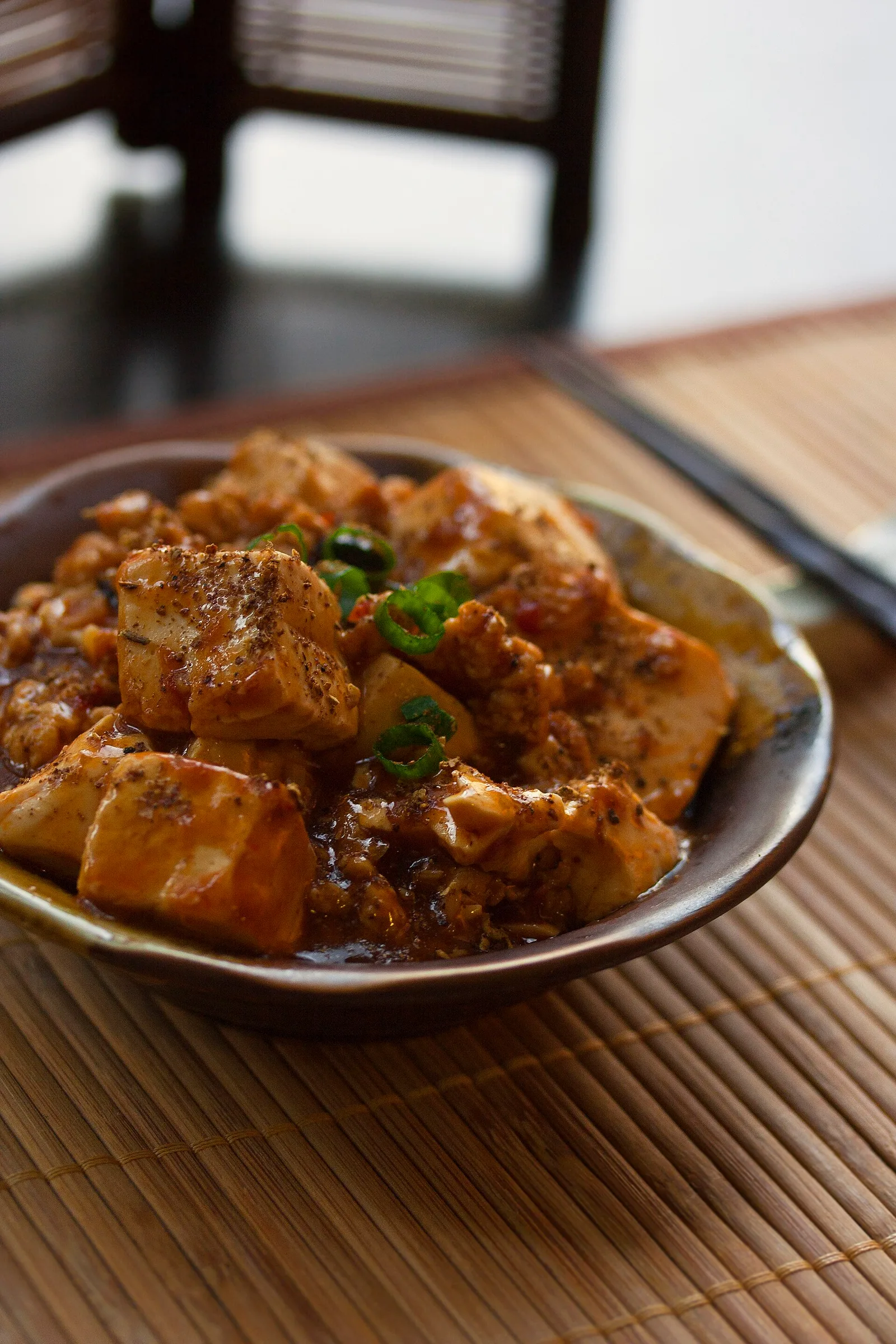
Prices vary by portion and venue. A small plate at a neighborhood restaurant might cost CNY 25–45, while a larger plate or a tourist-facing restaurant runs CNY 40–70. Supermarket vacuum packs are cheaper but not a fair introduction. Verify current prices, since beef prices and portion sizes move. Pair it with mapo tofu or a bowl of dan dan noodles for a simple meal, and save hotpot for another night.
The dish is a natural beer snack, and many casual restaurants expect payment by QR code. If you are still setting up mobile payments, do that before you sit down. Tipping is not expected, and the bill is usually settled at the counter or by scanning a code at the table.
Best for
- Adventurous eaters who like cold, spicy dishes
- Travelers building a shared Sichuan table
Honest notes
- The classic version contains tripe and other offal.
- Peanuts are a standard garnish and cross-contact is likely.
- The name mentions lung, but most modern versions do not contain it.
Not for
- Anyone with a peanut allergy
- Visitors who dislike offal or numbing spices
Keep planning