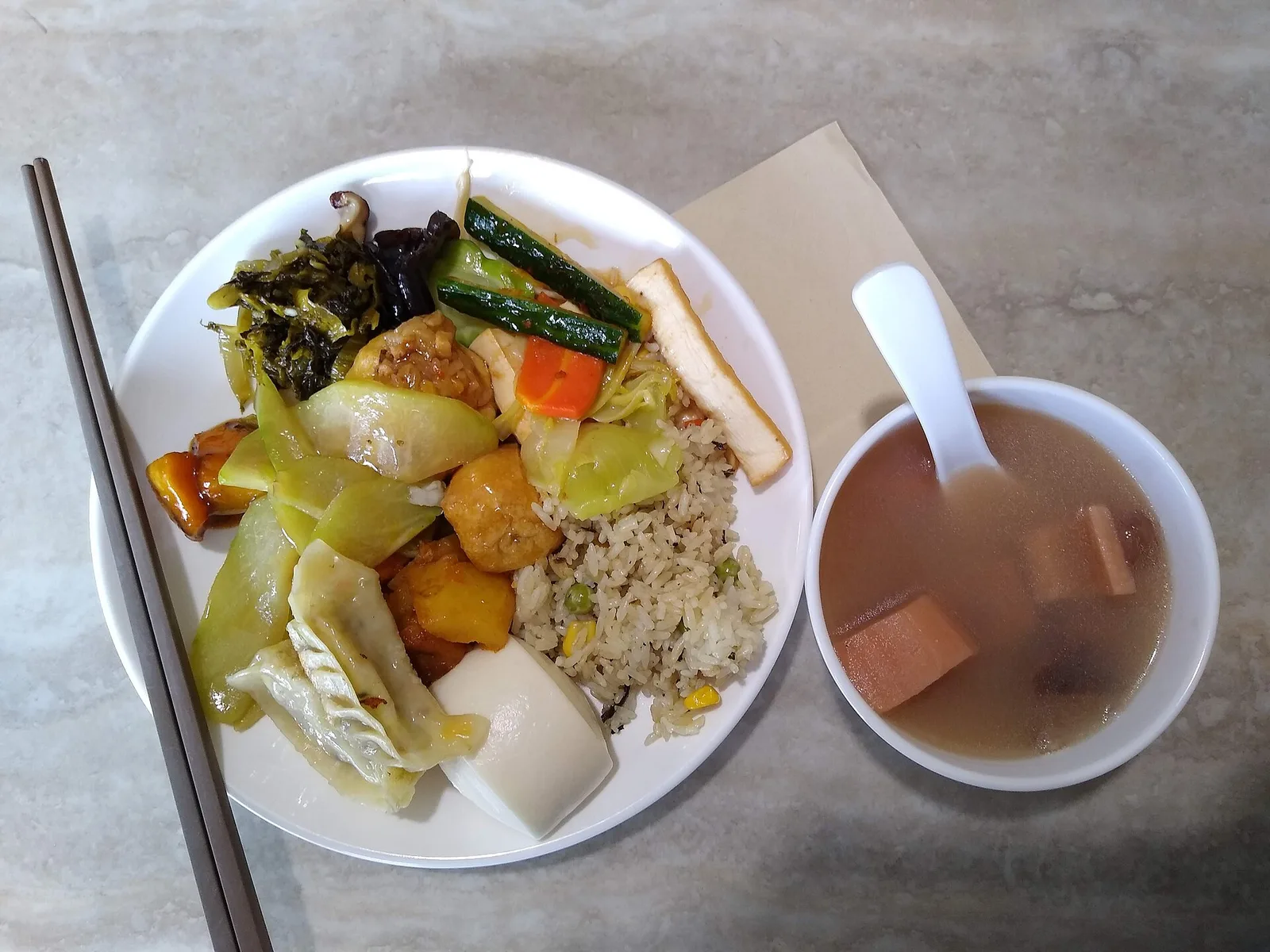
Sichuan food is built on pork, beef tallow, and meat stock, so vegetarian eating in Chengdu takes more than pointing at a vegetable dish. The word for vegetarian, su, is widely understood, but it often means no visible meat rather than no animal products in the cooking. Vegan eating is harder again. The city does have Buddhist temple restaurants, dedicated vegetarian places, and vegetable dishes that can be made meat-free on request. With a written Chinese card and a few reliable venues, a short trip is manageable. Without them, you may end up eating plain rice and cucumbers.
Why vegetarian is not the default
Sichuan cooking uses animal products as seasoning, not just as main ingredients. A vegetable stir-fry may be cooked in lard, seasoned with chicken essence, or finished with meat stock. Mapo tofu traditionally contains minced pork or beef, and many cold dishes include dried shrimp or oyster sauce. Even a dish listed as vegetables can arrive with a few slices of pork for flavor. The local word su (素) means plain or vegetarian, but in a busy kitchen it may only mean no chunks of meat. If you eat strictly vegan or avoid all animal products, you need to name each ingredient you are avoiding.
Buddhist vegetarian food, called zhaisu (斋素), is the strictest local tradition and is served at temple restaurants and some nearby shops. It usually avoids meat, fish, eggs, and dairy, and often leaves out garlic, onion, chives, and leeks as well. That makes temple food a safer bet than a random restaurant, though not every temple kitchen is open all day and some dishes are fried or oily. Dedicated vegetarian restaurants in the city range from simple buffets to polished dining rooms; look for the characters 素食 on the sign or in a map listing.
Phrases that actually help
Learn the difference between eating vegetarian and eating strictly vegan. Wo chi su (我吃素) means I eat vegetarian. Chun su (纯素) or quan su (全素) means fully vegan or strict vegetarian. Then name the hidden ingredients: bu yao rou (不要肉), no meat; bu yao roumo (不要肉末), no minced meat; bu yao zhuyou (不要猪油), no lard; bu yao gaotang (不要高汤), no meat stock; and bu yao haoyou (不要蚝油), no oyster sauce. A server may agree to one request and miss another, so list them together.
Carry the requests on a phone screen or a printed card in Chinese, and show it before ordering rather than after the food arrives. Ask whether the vegetable dish is cooked with meat stock or lard, and whether the wok can be cleaned. The language guide has more on translation and restaurant communication. If the answer is vague, choose a plain dish such as steamed greens, rice, or plain noodles, and ask for sauce on the side. At a dedicated vegetarian venue, you can relax more, but still confirm whether egg or dairy is used if that matters to you.
Where to eat meat-free
The area around Wenshu Monastery is the most established place to start, with temple-style restaurants and small vegetarian shops in the surrounding lanes. Daci Temple, next to Taikoo Li, is another temple site with vegetarian dining nearby. Dedicated vegetarian buffets and restaurants are scattered across the city; search for 素食 on a map app and check recent photos and hours before making a trip. International restaurants, Indian and Japanese kitchens, and hotel restaurants can also prepare meat-free meals, usually at a higher price and with more reliable communication.
Hotpot is possible but needs care. The classic red broth contains beef tallow, and even a clear or mushroom broth may be made with chicken stock. Ask for a vegetarian broth and confirm no tallow or meat stock, or choose individual small pots so your vegetables do not cook in a shared meat broth. Vegetable skewers at chuan chuan stalls are cheap, but the shared pot is the problem. The hotpot guide explains the ordering flow. Noodle shops can make a plain vegetable bowl, but the soup base is often meat-based, so ask for no stock or choose dry noodles.
Realistic expectations
Cross-contamination is normal in busy Chinese kitchens. Woks are wiped rather than washed between dishes, ladles move between pots, and a vegetarian dish may be fried in oil that has cooked meat. Strict vegans should treat this as likely rather than exceptional. Temple restaurants and dedicated vegetarian venues are the safest choice. If you have a serious allergy rather than a preference, do not rely on a casual restaurant's promise; choose a venue that understands the risk and bring a clear written explanation.
Variety is thinner outside dedicated places. Breakfast is often congee, soy milk, steamed buns, and pickles, with meat buns mixed in, so check before biting. Street food offers roasted sweet potato, corn, fruit, and some tofu skewers, but sauces may contain meat or fish. Convenience stores and supermarkets are useful for fruit, nuts, bread, and dairy if you eat it. Temple restaurants tend to be cheap, modest, and busy at lunch, and some close in the late afternoon. Plan an early lunch rather than arriving hungry at 3 pm.
Best for
- Vegetarians and vegans visiting Chengdu
- Flexitarians who want meat-free meals without a strict schedule
Honest notes
- A vegetable dish may still be cooked with lard or meat stock.
- Cross-contamination is common in busy kitchens.
- Vegan options are limited outside dedicated restaurants and temples.
Not for
- Travelers who expect clearly labeled vegetarian menus everywhere
- Anyone unwilling to explain dietary needs in writing
Keep planning